
VS
Baxter of California Clay Pomade vs American Crew Fiber: Which Matte Hold Is Actually Worth Your Money?
Two matte styling stalwarts, one winner — and the price difference might surprise you.
Last updated: June 1, 2026
Quick Answer
For most men, American Crew Fiber is the better buy - same hold quality as Baxter of California Clay Pomade at roughly half the cost-per-use, with a two-decade track record that no amount of clay pomade marketing can argue with. Baxter wins on finish purity and reworkability if you have medium-to-thick hair and genuinely care about the difference between matte and matte-adjacent - but that's a premium most people shouldn't pay.
There's a specific kind of grooming content that reviews matte pomades by talking about 'texture' and 'natural movement' for 800 words before telling you absolutely nothing useful. This is not that.
The matte hold category has a problem: the marketing is extremely confident, the actual performance gap between a $22 'clay pomade' and a $16 'fiber' is often negligible, and nobody's doing the honest arithmetic on what you're paying per gram of product. So we put Baxter of California Clay Pomade - the mid-range poster child, the one barbershops stock because it photographs well - directly against American Crew Fiber, which has been quietly doing the same job since before half their customer base was born.
Two products, same score (78/100), different price-per-use, different finish character. One of them earns its place in your bathroom cabinet. The other earns its place on your bathroom cabinet if you're the kind of person who notices the difference. The guide below is for both types of person - because being honest about which type you are is, genuinely, the whole decision.
Featured Products
The stronger value play by a clear margin - half the cost-per-use, comparable hold performance, and a track record that requires no marketing to justify. The matte-adjacent finish is a real limitation compared to Baxter, and the reworkability is less clean, but for most men's daily requirements neither gap is meaningful enough to justify the premium.
The budget benchmark in the matte hold category - outperforms boutique competitors at its price point and gives Baxter a closer contest than either brand's marketing would suggest.
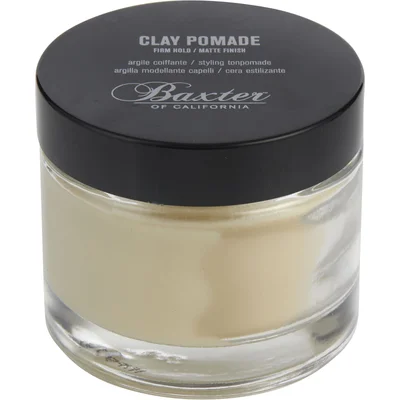
Earns its premium on two genuine differentiators - cleaner matte finish and better mid-day reworkability - but the 2oz-for-$22 sizing is a poor volume-to-price ratio that makes the cost-per-use gap with American Crew hard to ignore. Worth the upgrade if you've identified a specific problem it solves. Not worth defaulting to based on branding alone.
The mid-range category leader in matte clay pomades - a legitimate comparison point for anyone weighing up whether the step up from American Crew is justified.
Why This Match-Up Matters (And Why Most Reviews Get It Wrong)
Most head-to-head grooming reviews fail because they refuse to reach a verdict. They describe both products, list the notes on the tin, and conclude with something like 'it depends on your hair type!' - which is technically true and completely useless.
Here's what actually matters in a matte styling product: finish quality (is it actually matte, or just less shiny than pomade?), hold longevity (is it still doing its job at 4pm?), reworkability (can you run a hand through your hair and fix it, or does it just redistribute the problem?), and cost-per-use (because if two products perform identically and one costs twice as much per application, the cheaper one wins, full stop).
The reason this specific match-up matters is that these two products share a score, share a category, and are routinely recommended interchangeably - but they're not interchangeable. The differences are real. They're just smaller than either brand wants to admit.
---
The Contenders: What You're Actually Buying
Baxter of California Clay Pomade
Launched around 2010, repositioned about four times in the marketing, currently sitting at $22 for 2oz (57g). Kaolin clay base, matte finish claim, water-based so it washes out cleanly. It's the product a Soho barbershop puts on the counter to signal that it's not a SuperCuts. Whether it performs like that price point is the whole question.
The branding is immaculate, and I say that as someone who has spent twenty years making branding immaculate professionally. The brief was clearly 'premium male grooming, 30-something, minimalist, aspirational without being alienating.' Whoever wrote the deck knew what they were doing. Whether the product inside matches the tin is a separate question.
American Crew Fiber
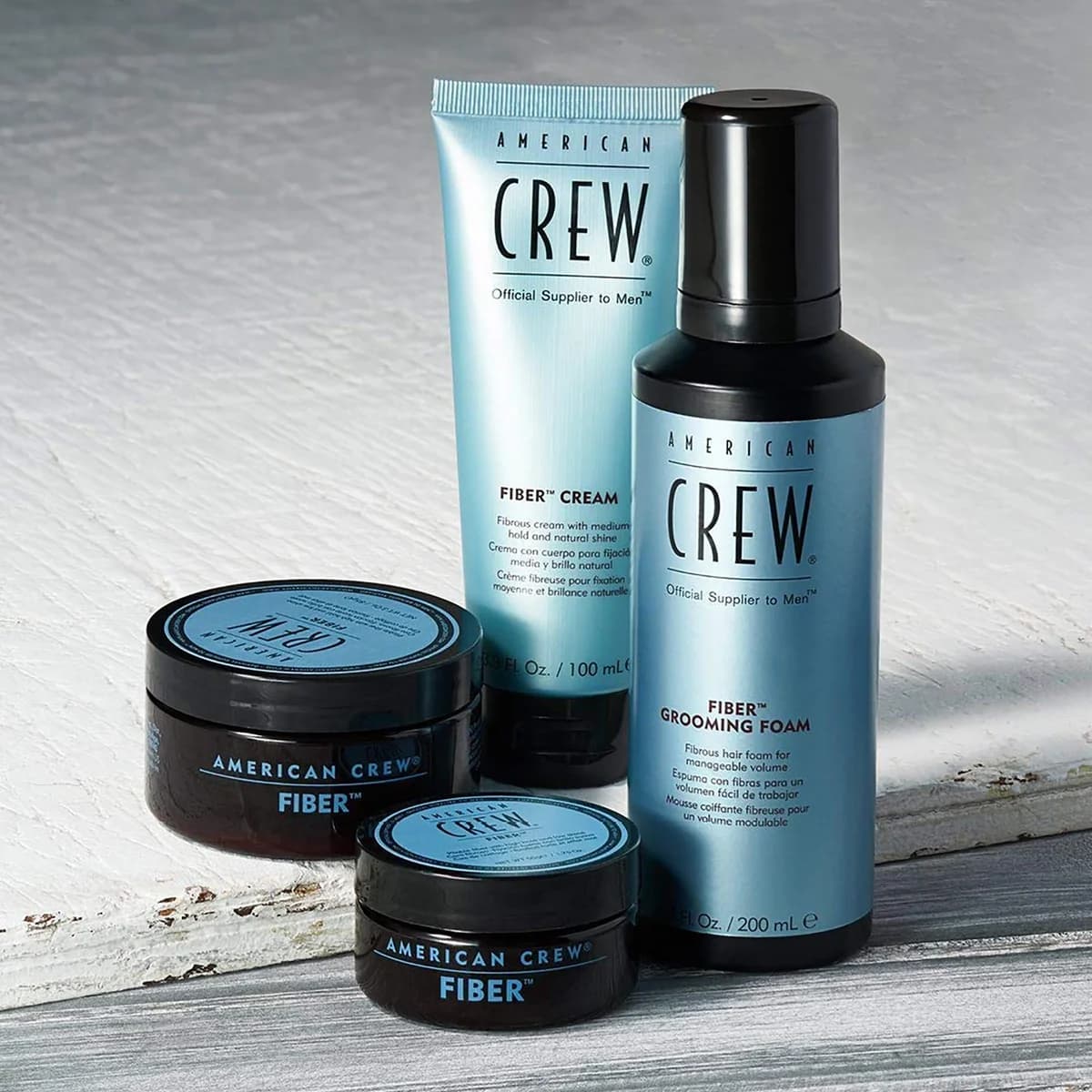
Launched in the mid-90s. No rebrand needed because the formula has been doing the same reliable thing for thirty years. $16 for 3oz (85g). High hold, matte-adjacent finish, wax-based. The product equivalent of a plumber who turns up on time - nobody's writing a profile piece, but the job gets done.
You'll find this in professional barbershops not because it's photogenic but because barbers go through product volume and this performs at scale without burning through their margins. That's a more meaningful endorsement than any lifestyle campaign.
---
Finish Quality: Matte vs Matte-Adjacent
This is the clearest difference between the two, and it's the one that actually justifies the price gap - if you care about it.
Baxter delivers a genuinely matte finish. Under direct light, in a meeting, in a photograph, the hair reads as naturally dry. No shimmer, no sheen, no trace of product. It does what it says.
American Crew Fiber is matte-adjacent. On most hair types, in most lighting conditions, you won't see shine. But hold it under direct light or put it on finer hair and there's a slight waxy quality - not quite shine, but not the clean dryness Baxter achieves either. Call it 85% matte on a good day.
For the vast majority of daily situations - office, pub, date, general existence - this gap is invisible. For editorial photos, for very close inspection, for men who specifically want that clean textured-but-dry look without any product evidence, Baxter wins on finish. By a margin that matters if you're paying attention and doesn't matter at all if you're not.
> Mariana's take: From where I'm sitting, I cannot tell which product a man is wearing. What I can tell is whether his hair looks intentional or accidental. Both products, applied correctly, get you to intentional. Baxter gets there with slightly more polish - the finish is cleaner on men with good cuts. American Crew Fiber reads as 'styled' rather than 'groomed,' which isn't necessarily worse, just different.
---
Hold Strength and Longevity: Six Hours of Truth
Both products claim strong hold. Here's what that means in practice.
Baxter delivers 6-8 hours on medium-to-thick hair without crunch or stiffness. It holds shape without cementing it - which sounds like marketing language but is actually a meaningful product characteristic. Hair stays in place, still feels like hair rather than a helmet. On fine hair, though, this becomes over-hold: the clay weighs down thin strands and the result looks flat by midday.
American Crew Fiber holds similarly - strong enough for most styles, no crunch - but with a subtle wax memory that means the style sets slightly harder over time. Not rigid, but less 'living' than Baxter by hour four. The upside is that this wax component actually helps with hair that needs structural support. The downside is that touch-ups are less clean.
Honest verdict on longevity: negligible real-world difference for most men with most styles. Both get you through a working day. Baxter has a slight edge on texture preservation over time. American Crew has a slight edge on structural hold for styles that need it.
---
Reworkability: Can You Fix It at 3pm Without Looking Like You Tried?
This is where Baxter earns genuine points.
Baxter Clay Pomade stays pliable. Run your hand through your hair at 3pm, reshape, it responds. This is the clay formula doing what clay formulas are supposed to do - maintaining workability without requiring a full re-application. For men who have a lunch meeting and then a 5pm call and want the hair to be fixable without going near a mirror, this is a real functional difference.
American Crew Fiber is less cooperative. It reworks, but less cleanly - the wax base has partially set by mid-afternoon, and working fingers through it tends to distribute product unevenly rather than reshape. The result can look slightly patchy if you've tried to fix it without a mirror. Not a disaster, but not elegant either.
If your day involves a commute, a desk, three meetings, and a post-work drink - and you want your hair to survive all of it without active maintenance - Baxter wins this dimension clearly.
---
Hair Type Compatibility: Who Each Product Is Actually For
Both products have the same core limitation: they're not for fine or thinning hair. Both will over-hold, collapse volume, and make thin hair look either flat or stringy depending on how much product you applied. This isn't a knock on either - it's the clay and wax hold mechanism doing exactly what it's designed to do, which doesn't suit low-density hair.
Who Baxter is for: Medium-to-thick hair, 2-4 inch length, any style requiring a clean matte result - textured crops, side parts, slightly undone quiffs. Also for men who care about finish precision and will take the time to learn dosage (which is small - we'll get to that).
Who American Crew Fiber is for: Medium-to-thick hair, similar length range, but particularly good for men who want structural hold without overthinking it - classic barbershop styles, short-to-medium textured cuts. Also for men who don't want to pay premium pricing and genuinely cannot tell the difference in finish quality (which, respectfully, is most men).
If you have fine or thinning hair, neither of these is your product. Both will flatten what you're trying to preserve. Look at a lighter water-based cream or a volumising product instead - but that's a different guide.
---
Application: Where Beginners Go Wrong With Both
The single most common error with both products is using too much. This deserves emphasis because the consequences are different and both are unpleasant.
With Baxter: Too much product produces a stiff, slightly cakey result. Hair looks over-styled, the matte finish becomes a matte crust, and it reads as 'man who tried too hard in 2009.' Start with an amount roughly the size of a pea. Warm it thoroughly between palms - this is not optional, it's the step that determines whether you get even distribution or clumpy application. Work through hair from back to front, then shape.
With American Crew Fiber: Too much product produces the opposite problem - the wax content causes greasy, weighed-down results that look damp rather than styled. Same rule: start smaller than you think. The tin is dense and a little goes genuinely far. The beginner mistake is scooping a fingernail's worth because 'it doesn't look like much' and then spending twenty minutes trying to fix it.
Correct application for both: dry or slightly damp hair (not wet - wet hair dilutes hold significantly), small amount, warm thoroughly, work in sections. Five minutes of correct application beats ten minutes of rescue.
---
Cost-Per-Use Breakdown: The Number Baxter Doesn't Want You to Do
This is where the value conversation gets concrete.
Baxter of California Clay Pomade:
- Price: $22 for 2oz (57g)
- Recommended daily dose: approximately 0.5g per application
- Estimated uses per tin: 100-110 applications
- Cost per use: approximately $0.20
American Crew Fiber:
- Price: $16 for 3oz (85g)
- Recommended daily dose: approximately 0.5-0.6g per application
- Estimated uses per tin: 140-160 applications
- Cost per use: approximately $0.10
That's roughly 2x the cost-per-application for Baxter. Over a year of daily styling, the gap is around $18-25 in real money. Not life-changing, but not nothing either.
For that premium you get: a cleaner matte finish, slightly better reworkability, marginally better texture preservation at hour six. Whether those differences are worth $18-25 annually is a personal question, and I'm not going to condescend to you by answering it. But you should know the number before you decide.
---
Mariana's Verdict: Does Either One Change How a Man Reads in a Room?
> Mariana's take: Neither product is visible. That's the point. What I notice is whether a man looks put-together or like he's having a bad day from the hairline up. Baxter, applied correctly, gives a cleaner, slightly more considered result - it reads as intentional grooming rather than just product. American Crew Fiber reads as 'styled,' which is fine. The honest answer is that on a well-cut head of hair, both work. The difference between them is not something most people in a room will consciously register. What they'll register is whether you used too much of either one.
---
Jamie's Verdict: Which One Earns a Place in the Bathroom Cabinet
American Crew Fiber wins on value. Baxter of California Clay Pomade wins on finish quality and reworkability. Both score 78/100, which is exactly right - they're genuinely comparable in overall performance, just different in where their strengths land.
Here's the actual decision framework:
Buy American Crew Fiber if: You want strong, reliable hold at a price that makes sense, you're not precious about the precise finish character, and you're happy to use a product that's been performing this job since before social media made everyone a grooming expert.
Buy Baxter Clay Pomade if: You have medium-to-thick hair, you care specifically about a clean matte finish with no waxy quality, you want your hair to remain reworkable through the day, and you're prepared to pay roughly double the per-use cost for those differences.
The honest summary: most men should buy American Crew Fiber. Men who have already bought American Crew Fiber, used it correctly, and found themselves thinking 'this is good but the finish isn't quite right' should try Baxter. That's not a small group - but it's a specific one, and the upgrade is only worth making if you've identified the problem it solves.
Tips
- 1.Start with less product than you think you need. For both, a pea-sized amount on dry or slightly damp hair is the correct starting point. The single most common error with both is over-application, and the results are unpleasant in different ways: cakey with Baxter, greasy with American Crew.
- 2.Warm the product fully between your palms before touching your hair - this step determines even distribution vs clumpy patches, and most people skip it. Ten seconds of rubbing changes the application outcome significantly for both formulas. Not optional. Actually do it.
- 3.If you have fine or thinning hair, neither product is suitable - both will collapse volume rather than support it. The matte clay and wax hold mechanisms are built for medium-to-thick hair, and the answer isn't using less product, it's using a different product category entirely.
The Bottom Line
American Crew Fiber is the correct default for most men - it does the job, costs half as much per use, and has earned its place in professional barbershops on merit rather than marketing. Look, if you've used it correctly and found the finish slightly too waxy or the mid-afternoon reworkability frustrating - and I cannot stress this enough - that's the specific problem Baxter of California Clay Pomade exists to solve, and it's a genuine upgrade worth the premium. The gap between them is real. It's just smaller than $6 smaller, depending on who you are.