
BEST OF
Best Shampoos for Thinning Hair 2026: What Actually Works (and What's Cope)
Three picks that do something. The rest is just scalp theatre.
Last updated: May 1, 2026
Quick Answer
Nizoral A-D Anti-Dandruff Shampoo is the top pick for thinning hair in 2026 - it's a £10 antifungal with a peer-reviewed study behind it suggesting real hair shaft diameter improvement, not a 'thickening complex' someone invented in a marketing meeting. Twice a week, and your scalp is actually being treated rather than just cleaned with expensive hope.
The thinning hair shampoo market is, and I cannot stress this enough, almost entirely cope. Walk the shampoo aisle of any Boots and you'll find bottles promising 'volumising biotin complexes,' 'hair density systems,' and something called 'follicle reactivation technology' - none of which have a mechanism that holds up to thirty seconds of scrutiny. They're selling you the feeling of doing something about your hair, which is a different product entirely from something that actually works.
Here's the baseline reality: no shampoo regrows hair. If that's what you're looking for, you need minoxidil and a conversation with a dermatologist, not a £28 bottle with a clinically styled font. What shampoos can do is meaningful but narrower - reduce scalp inflammation, address fungal overload that accelerates shedding, clear the environment so your follicles aren't fighting upstream, and in the case of one specific ingredient, potentially improve hair shaft diameter with actual peer-reviewed data behind it. That's the brief. Not modest, just accurate.
Three products made it through the filter. Ranked by evidence quality, not marketing budget or bottle aesthetic. One costs £10 and has a 1998 clinical study in its corner. One has been the same formula for thirty years because it works. One is a scalp environment play for men who've started noticing the drain and want to do something sensible before reaching for the big guns. None of them will add a PSL point. All of them are better than whatever 'biotin-infused strengthening system' you're currently using.
Featured Products
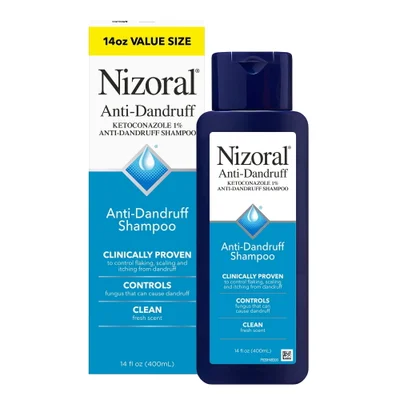
The only shampoo in this category with a peer-reviewed study suggesting hair shaft diameter improvement - one study from 1998, yes, but that's one more than virtually everything else on this shelf. At £10 and twice-weekly use, the cost-per-evidence ratio is, genuinely, absurd. The experience of using it is clinical and joyless, which is fine because it's medicine, not a treat.
The strongest evidence base of any OTC shampoo for the thinning hair use case, with a named active ingredient at a disclosed concentration and a credible biological mechanism.
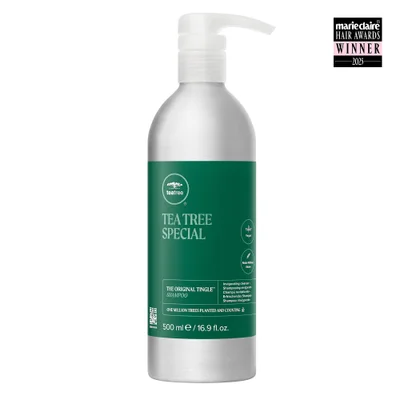
Thirty years of the same formula is a quiet kind of confidence most of the 2024 'scalp health' launches can't match. The tea tree concentration isn't disclosed, which is a legitimate frustration, but the scalp oil control is real and the scent is genuinely excellent - a rare combination of sensory reward and functional result. If your scalp is oily and your hair is unprocessed, this earns its place.
Best scalp oil control of the three with a strong consistency track record and real-world longevity that newer launches can't yet demonstrate.
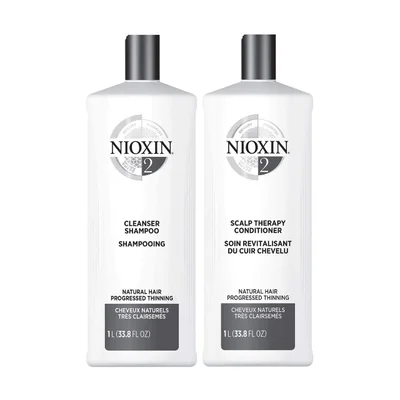
The niacin mechanism is plausible and the professional heritage is real, but the biotin inclusion is marketing and the evidence for actual hair retention from this specific product is thin. What it does reliably: cleans without stripping, improves scalp clarity within weeks, and gets you to a better baseline environment for follicle health. A sensible early-intervention choice for the man who's noticed the drain and wants to do something intelligent before reaching for finasteride.
Best positioned for early-stage thinning with a credible scalp environment mechanism and genuine clinical adoption, making it the right bridge product before pharmaceutical intervention.
The Thinning Hair Shampoo Market Is Mostly Cope - Here's How to Spot the Real Ones
The tell is always in the language. 'Supports the appearance of thicker hair' means nothing. 'Biotin-enriched' means the formula contains biotin, not that the biotin is doing anything - rinse-off products don't deliver biotin meaningfully to follicles, which are below the scalp surface and completely indifferent to what's passing over them in the shower. 'Clinical-strength' without a disclosed active ingredient and concentration is a font choice, not a claim.
The products worth your time have three things in common: a named active ingredient at a disclosed concentration, a plausible biological mechanism (not 'nourishes from root to tip'), and ideally some kind of external evidence - a study, clinical adoption, a thirty-year track record. That's it. That's the whole filter. Apply it and roughly 80% of the market evaporates.
The three that remain.
---
Our Picks at a Glance: Ranked by Evidence, Not by Marketing Budget
| Product | Score | Price Tier | Key Mechanism |
|---|---|---|---|
| Nizoral A-D Anti-Dandruff Shampoo | 88/100 | Budget | Ketoconazole antifungal |
| Paul Mitchell Tea Tree Special | 78/100 | Mid-range | Tea tree oil, scalp oil control |
| Nioxin System 2 Cleanser | 74/100 | Mid-range | Niacin vasodilation, scalp environment |
---
Best Overall: Nizoral A-D Anti-Dandruff Shampoo - The £10 Antifungal With Peer-Reviewed Backup
Best for: Men experiencing thinning alongside persistent dandruff or seborrheic dermatitis - or anyone whose scalp has been inflamed and itchy for years and who assumed that was just how scalps worked.
Category: Medicated antifungal shampoo
Active ingredient: 1% ketoconazole
Look, I'm going to say something that sounds like it belongs on a niche dermatology forum, but stay with me: a lot of male hair thinning is being accelerated by Malassezia yeast. This is the fungal species responsible for dandruff and seborrheic dermatitis, and chronic scalp inflammation from persistent fungal overload is, plausibly, not doing your follicles any favours. Ketoconazole - the active in Nizoral - directly targets Malassezia. That's not a 'scalp wellness' claim. That's a named pathogen and a named antifungal with a mechanism.
The peer-reviewed bit: a 1998 study published in *Dermatology* found that 1% ketoconazole shampoo produced hair shaft diameter improvements comparable to 2% minoxidil solution over 24 weeks. One study, mid-sized, now 27 years old - I'm not telling you this is settled science. But 'one credible study from a real journal' is already comfortably ahead of the evidence base for 98% of what's in the thickening shampoo category. Most of those products have zero studies. Nizoral has one, and it's a reasonable one.
Performance: You use this twice a week, not daily - leave it on for three to five minutes before rinsing. At that cadence, a single bottle lasts months. Flake reduction for most users is visible within two to four weeks. Scalp inflammation calms noticeably. The hair shaft diameter effect, if it's happening for you, would take longer - twelve weeks minimum before you'd notice anything meaningful.
The formula is thin and clinical with minimal lather. There's no sensory reward here. It smells faintly medicinal, feels like applying gel to your head, and produces almost no foam. If your morning shower is part of a luxury ritual you care about, Nizoral is going to feel like a downgrade. It isn't one - but the experience tells you it might be.
Price: Around £10-15 for a 200ml bottle. At twice-weekly use, that's exceptional cost-per-wash. The prescription 2% formulation is stronger for severe seborrheic dermatitis, but the OTC 1% is the starting point and it's accessible without a GP visit.
Honest cons: The evidence for hair retention is limited to that one 1998 study - plausible mechanism, not confirmed. The 1% concentration is weaker than what dermatologists prescribe for serious cases. And nothing about this product is pleasant to use in the way a good shampoo can be pleasant to use.
> Mariana's Take: The men I've known who've used Nizoral consistently for six months don't suddenly have more hair - but their scalps look healthier, and somehow that reads. There's something about a clean, non-inflamed scalp that changes how the hair sits. It's subtle. It's real.
---
Best for Oily Scalps: Paul Mitchell Tea Tree Special Shampoo - Thirty Years Old and Still Doing the Job
Best for: Men with oily, easily congested scalps who are losing the battle against product buildup and excess sebum - and who want something that feels genuinely good to use rather than medicinal.
Category: Clarifying / scalp health shampoo
Key ingredients: Tea tree oil, peppermint, lavender
Thirty-plus years without a reformulation. In a market that 'revolutionises' itself every eighteen months with a new complex nobody can pronounce, that's either laziness or quiet confidence. The Paul Mitchell Tea Tree Special has been the same formula since the early 1990s because the formula works, and whoever's running that brand has had the rare self-control not to tinker with it.
The mechanism here is less dramatic than Nizoral's but more immediately sensory. Tea tree oil has documented antimicrobial and antifungal properties at sufficient concentrations - the problem is Paul Mitchell doesn't disclose the tea tree percentage, which makes clinical comparisons impossible. What it does do, observably and consistently, is reduce scalp oil accumulation within one to two weeks of regular use. If your hair is limp and flat by midday because your scalp produces enough sebum to lubricate a bicycle chain, this genuinely helps. The tingling on application is the peppermint - it's real, it's not harmful, and it signals that something is happening, which is more than most shampoos can claim.
The scent is genuinely excellent and holds for several hours post-wash. I'll admit that's not a clinical benefit, but it matters - you'll actually use a product that smells good, which makes consistency more likely, which is where any grooming product's real value is.
Performance: Strong scalp oil control. Clear scalp within one to two weeks. The lather is satisfying. The tingling sensation is polarising - some people find it too intense; most find it the best part of their morning. Longevity of the clean-scalp effect is notably good compared to standard shampoos.
Don't use this on dry hair, colour-treated hair, or chemically processed hair. It will strip the life out of it. This is a product for oily scalps with resilient, unprocessed hair. If that's not you, this is actively the wrong choice.
Price: The litre bottle runs somewhere between £20-30 depending on where you buy it, delivering 30-40 washes at strong cost-per-use value. The caveat: salon retail pricing inflates this significantly. Buying from the salon counter is borderline irrational when the same bottle is available online for substantially less.
Honest cons: No disclosed active concentration makes it impossible to know whether you're getting a therapeutic dose of tea tree or a fragrance-level inclusion. Too aggressive for anything other than oily, robust hair. And without knowing the concentration, the antifungal benefit is anecdotal rather than assured.
---
Best for Early-Stage Thinning: Nioxin System 2 Cleanser - A Scalp Environment Play for Men Who've Noticed the Drain
Best for: Men in the early stages of thinning - fine, natural, progressing - who want to do something intelligent before the situation requires pharmaceutical intervention. Not for men with thick hair looking to add volume.
Category: Professional scalp treatment shampoo
Key ingredients: Niacin (niacinamide), biotin (rinse-off - manage your expectations), purifying cleansers
Nioxin has been in professional salons long enough to have actual clinical credibility, which already puts it ahead of the wellness brands who launched a 'scalp system' in 2023 with a clean aesthetic and a vague ingredient deck. The System 2 formula is specifically built for fine, natural hair with progressing thinning - that targeting is meaningful, because a product that actually knows who it's for is more useful than one that's for everyone.
The legitimate mechanism here is niacin. Niacinamide has credible vasodilatory evidence - it supports blood flow, and scalp microcirculation matters for follicle health. At repeated use over time, there's a reasonable basis for thinking this contributes to a better scalp environment. 'Reasonable basis' is where I'll leave that - it's not the ketoconazole literature, but it's not nothing.
The biotin, however... look, I'll be straight with you: the biotin in this product is almost certainly marketing. Rinse-off biotin does not meaningfully reach follicles. They're below the scalp surface. The biotin is on the ingredients list because 'biotin' is a word that sells shampoo in 2026, not because it's doing the work. Don't let it influence your purchase decision in either direction.
What Nioxin System 2 does demonstrably well: it cleans thoroughly without the brutal stripping of SLS-heavy supermarket shampoos. Scalp clarity and reduced oiliness within two to three weeks is a real outcome for most users. The low-lather formula takes adjustment - it feels like it's not working because you've been conditioned by foam to associate lather with cleanliness. The foam is incidental. The result isn't.
Performance: Scalp environment improvement is real and observable. The niacin vasodilation benefit is plausible and cumulative - this is a twelve-week product, not a two-week one. Best used as part of the wider Nioxin system (conditioner, scalp treatment) for maximum effect, though the cleanser alone is still useful.
Price: Mid-range, typically £20-28 for a larger bottle. The cost-per-use is reasonable. Not a budget product but it's priced sensibly for its positioning.
Honest cons: Minimal lather is a genuine psychological barrier for some - it feels underwhelming and takes two to three weeks to stop feeling like you haven't properly washed your hair. Biotin inclusion is largely marketing and should be ignored. And it's narrowly targeted - useless for anyone who isn't experiencing fine, thinning hair. If that's not your situation, move along.
> Mariana's Take: Nioxin is the one I've seen actually change how a man's hair sits over time. Not dramatically. But a man who's been using it for three months has a scalp that looks less angry and hair that behaves better. Whether it's the product or the fact that he's now paying attention to his scalp for the first time since 1997, I genuinely can't say.
---
What the Evidence Actually Says: Ketoconazole, Tea Tree, and Niacin Compared
Since we're being adults about this:
Ketoconazole (Nizoral): Strongest evidence base of the three. One peer-reviewed study showing hair shaft diameter improvement comparable to minoxidil. Clear biological mechanism via Malassezia suppression and anti-inflammatory effect. Limitation: one study, 1998, not since replicated at scale. Verdict: *most credible mechanism, most cautiously interpreted evidence.*
Tea tree oil (Paul Mitchell): Documented antimicrobial and antifungal properties in the literature, but study concentrations are typically 5% and above. Paul Mitchell doesn't disclose their concentration, which makes it impossible to confirm you're in therapeutic range. Scalp oil control and sensory benefit are observable. Hair retention benefit is unverified. Verdict: *real ingredient, unknown dose, observable secondary benefits.*
Niacin / niacinamide (Nioxin): Good evidence base for niacinamide in general dermatology - vasodilation, barrier support, anti-inflammatory. Scalp microcirculation benefit is plausible and the mechanism is sound. Direct hair retention evidence from shampoo use specifically is thin. Verdict: *credible ingredient, plausible mechanism, limited product-specific data.*
---
What These Shampoos Won't Do (And What You Need If They're Not Enough)
If you're experiencing significant, rapid, or diffuse hair loss - patches, recession at a pace that's measurable month-to-month, or total density loss across the crown - no shampoo is the answer. Shampoos work at the scalp surface environment. They can't override androgenetic alopecia (male pattern baldness) driven by DHT, which is a hormonal mechanism operating below the surface.
For that, the evidence-supported interventions are: minoxidil (topical or oral - the 1998 Nizoral study used this as a benchmark for a reason), finasteride or dutasteride (prescription DHT blockers - real side effect profile, real results), and for men who want both, combination therapy is standard in progressive trichology practice.
The shampoos in this guide are maintenance and optimisation. They're the sensible thing to do before you need the pharmaceutical tier, and a reasonable adjunct if you're already there. They are not the pharmaceutical tier. Anyone selling you a shampoo as a hair loss solution is selling you cope with a pleasant scent.
---
Frequently Asked Questions: Thinning Hair Shampoos, Answered Without the Fluff
Can shampoo actually stop hair loss?
No. Shampoos can reduce scalp inflammation, address fungal contribution to shedding, and improve the scalp environment. They can't stop androgenetic alopecia. Manage expectations accordingly.
How long before I see results?
Scalp condition improvement: two to four weeks. Any hair shaft or density change, if it's going to happen: twelve weeks minimum. If you're not patient, you'll buy seventeen shampoos and conclude none of them work.
How often should I use these?
Nizoral: twice weekly maximum. Paul Mitchell Tea Tree: two to four times per week depending on scalp oiliness. Nioxin System 2: daily use is fine and intended.
Can I combine them?
Nizoral twice a week plus Nioxin on other days is a reasonable protocol and what several dermatologists recommend informally. Don't use Paul Mitchell Tea Tree alongside either if you have anything other than an oily, robust scalp.
What about biotin supplements?
Oral biotin for hair has some evidence, primarily in populations with existing biotin deficiency. If you're eating a normal diet, you're almost certainly not deficient. The biotin market is, largely, cope. Sorry.
Tips
- 1.Use Nizoral twice weekly maximum - daily use will dry your scalp out and work against you. Leave it on for three to five minutes before rinsing, or the antifungal isn't actually doing anything.
- 2.If you're going to combine products, the protocol that makes sense is Nizoral twice a week plus Nioxin System 2 on other days. Don't double up on the same wash day - there's no benefit and you're just stripping your scalp.
- 3.Give any thinning hair shampoo twelve weeks before judging it. Scalp condition changes in two to four weeks; hair shaft or density changes take three months minimum. Men who buy a new shampoo every six weeks are funding the cope economy.
The Bottom Line
Nizoral is the pick, and it isn't particularly close. A named active, a disclosed concentration, a plausible mechanism, and one actual peer-reviewed study puts it ahead of everything else at this price point and most things at any price point. Use it twice a week, manage your expectations about what a shampoo can do, and if the drain situation is progressing despite three months of consistent use, the conversation you need to have is with a dermatologist about minoxidil - not with a more expensive shampoo.
Frequently Asked Questions
does shampoo actually help with thinning hair or is it all marketing?
is Nizoral good for thinning hair or is it just a dandruff shampoo?
how does Paul Mitchell Tea Tree Special Shampoo compare to Nizoral for thinning hair?
what does Nioxin System 2 actually do for thinning hair?
can shampoo regrow hair or just slow down thinning?
what ingredients in shampoo are actually worth looking for if your hair is thinning?
Related Guides
BEST OF
Best Perfumes for Women That Get the Most Compliments (Tested 2026)
Baccarat Rouge 540 wins this hands down. Yes, it's overhyped and costs more than my monthly coffee budget at $300+, but nothing else gets strangers stopping you in Target to ask what you're wearing like this sweet-woody beast that projects for hours.
VIBE GUIDE
Mewing, Hardmaxxing, and Other Lies the Internet Sold You: The Softmaxx Products That Actually Work
The EltaMD UV Clear SPF 46 is the single most impactful softmaxx product you can buy. Daily SPF is the only anti-ageing intervention with consistent clinical backing, and this one adds 5% niacinamide, leaves no white cast, and costs less per year than one round of whatever treatment the TikTok algorithm is currently selling you.
VIBE GUIDE
Beard Oil Is Mostly Cope (and Other Things Looksmaxxing TikTok Won't Tell You)
If you're only going to fix one thing, make it SPF. EltaMD UV Clear SPF 46 is the sunscreen dermatologists actually use on themselves - matte, niacinamide-spiked, and invisible enough that you'll run out of excuses not to wear it daily. Everything else in this guide is worth doing, but nothing moves the needle on long-term skin quality like consistent sun protection.