
HOW TO
SPF Myths That Won't Die in 2026: What Sunscreen Actually Does (and Doesn't)
The misinformation, the cope, and the one thing that actually ages you faster than anything else.
Last updated: August 25, 2026
Quick Answer
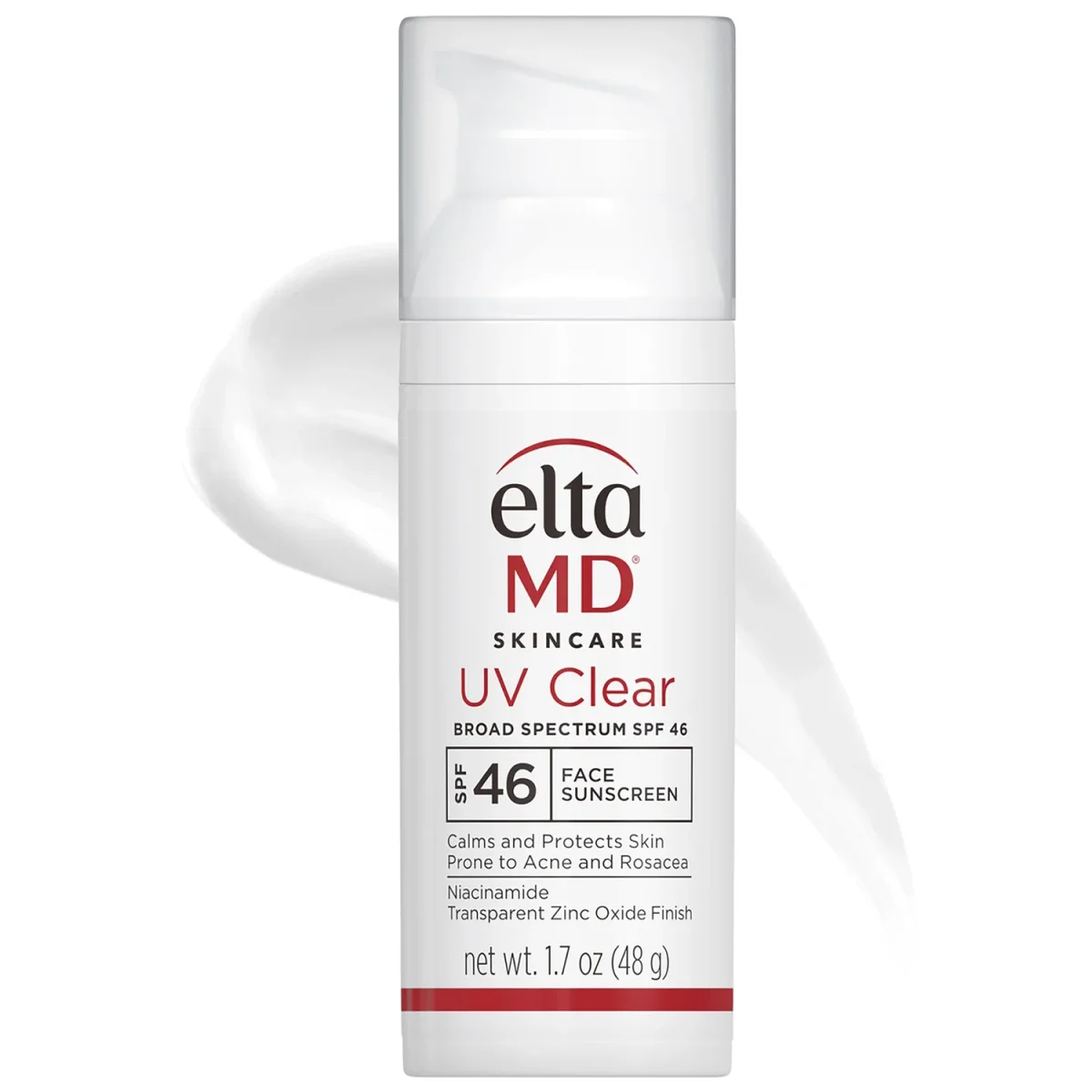
If you're only buying one daily SPF, EltaMD UV Clear SPF 46 is the one - matte finish, 5% niacinamide for sebum control, fragrance-free, and invisible enough on most skin tones that you'll actually use it every morning instead of telling yourself you'll start tomorrow.
Here's the condensed version of every men's SPF article you've ever half-read: wear it, reapply it, don't skip it in winter. Done. You may go.
Except you won't, because the actual reason most men don't wear sunscreen daily isn't laziness - it's that nobody has ever properly explained what SPF numbers mean, why your moisturiser's built-in factor probably isn't doing what you think it's doing, or why the $8 tube from the chemist might be quietly failing you in ways that won't show up on your face for another decade. The discourse is split between panicked dermatologists who communicate entirely in melanoma statistics and TikTok skinfluencers who've never met a UV ray they couldn't monetise. Neither is particularly useful if you're a grown man who just wants to know what to actually buy and why.
So. Six myths, one genuinely important gap in the US sunscreen market most men don't know about, and a short list of products that earn their place. This is the SPF brief I wish someone had handed me at 30 - which would have saved me roughly twelve years of skipping SPF because the texture annoyed me, and we don't need to dwell on what that cost.
Featured Products
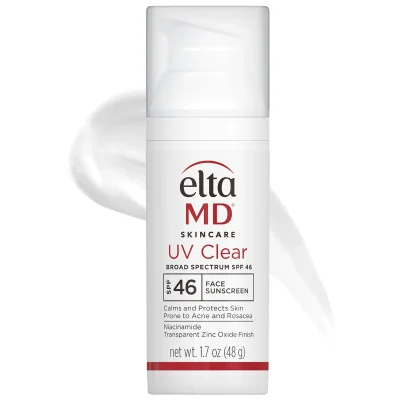
The best daily SPF for oily and acne-prone skin, and the one I'd hand to a man who's been making excuses about texture for years. Matte, invisible on most skin tones, and the niacinamide component means it's doing two jobs in one step. Marginally behind EU-formulated filters for UVA depth, but for everyday desk-to-commute use it's the most wearable option on this list.
The most compliance-friendly SPF in this guide - matte finish, minimal cast, and a niacinamide bonus that makes it worth the step even if you're SPF-sceptical.
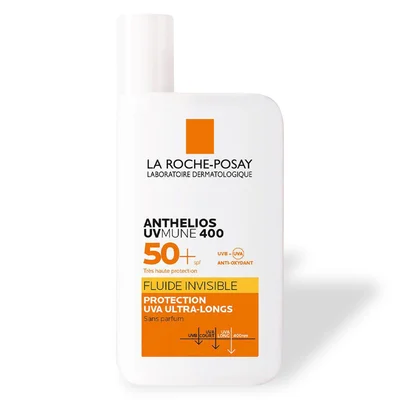
The best UVA coverage money can buy without a dermatologist's prescription, and the only product on this list that addresses the ultra-long UVA wavelengths US-formulated sunscreens can't reach. Worth the import logistics if you're serious about photoageing or spend meaningful time in high-UV environments. The invisible fluid finish is a genuine bonus.
The only product here that covers the UVA gap between US and EU-formulated sunscreens - essential context for the guide's central argument about UV protection quality.
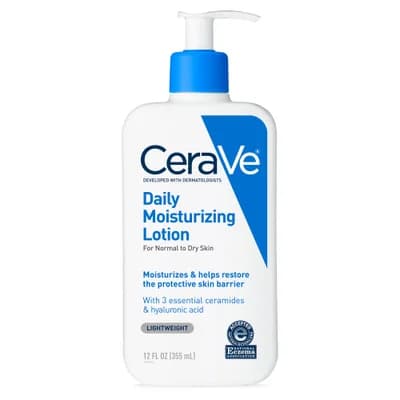
The product that removes every financial excuse for skipping SPF. It doesn't do anything exceptional - it does the core job reliably at a price that's essentially irrelevant as a consideration. The ceramide formulation is clinically backed, the fragrance-free formula is broadly tolerated, and the SPF 30 covers daily office-life UV exposure. Step up to SPF 50 for outdoor use.
The budget anchor of the guide - proves that excellent daily SPF compliance doesn't require a significant financial investment.
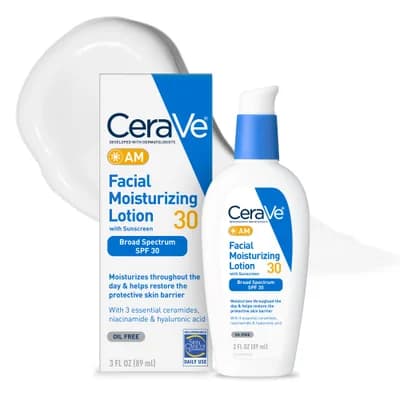
The one-step morning routine for men who won't be talked into a multi-product regimen. SPF 30, ceramides, niacinamide, fifteen cents per use. The white cast is real on medium-to-dark skin tones and the texture is heavier than premium alternatives, but as a gateway SPF for men who are currently using nothing, it earns its place completely.
The most accessible entry point in the guide - low price, one-step convenience, and strong barrier credentials make it the practical recommendation for men starting from zero.
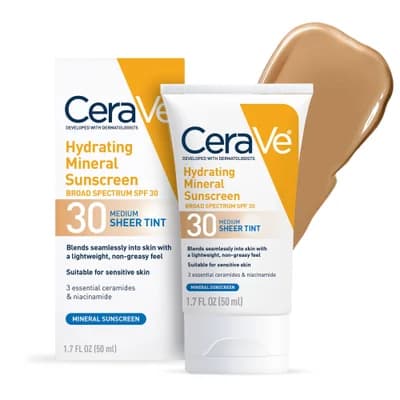
A solid mineral SPF for lighter skin tones that removes both the cost and the texture excuse. The ceramide base makes it a sensible option alongside retinol or acid routines. The white cast on deeper skin tones is a real problem, not a minor note - Fitzpatrick IV-VI users should look elsewhere.
Included to illustrate the mineral SPF white-cast myth in practice - both that it's improved and that it remains a genuine issue for a significant portion of the male population.
Why Men Get SPF Wrong (And Why It Costs More Than a Few Wrinkles)
Men are, statistically, significantly worse at wearing sunscreen than women. This is not a new observation - dermatology studies have been noting it for decades with the resigned air of people who've stopped being surprised. The reasons are roughly: nobody taught us, the products used to feel terrible, and there's a background cultural noise suggesting that caring about your skin is either vain or unnecessary or somehow both at once.
The practical cost of this is real. UV exposure accounts for an estimated 80-90% of visible skin ageing - the lines, the texture, the uneven tone, the slow leather-ification of the forehead. It's also the primary environmental driver of skin cancer, which kills more men than women partly because men present later. I'm not going to dwell on the cancer angle because this isn't a PSA, but I will note that the softmaxxing community - men using evidence-based grooming to look better, not bone-smashing, just products that work - has largely figured out what dermatology has been saying for years: SPF is the single highest-return move in a man's grooming routine. Tretinoin gets the looksmaxxing forum headlines, but SPF is what keeps the gains from degrading.
The problem is that most men are either skipping it entirely or using it wrong because of a small number of stubborn myths that won't die. Let's go through them.
---
Myth #1: SPF 50 Is Twice as Protective as SPF 25
This is the one that genuinely surprises people when they first hear it, and it matters because it shapes how men shop for sunscreen - usually by grabbing the highest number and assuming they've sorted it.
The SPF number measures how much UVB radiation reaches your skin relative to no protection. The maths works like this:
- SPF 15 blocks approximately 93% of UVB
- SPF 30 blocks approximately 97% of UVB
- SPF 50 blocks approximately 98% of UVB
- SPF 100 blocks approximately 99% of UVB
Those are not typos. The difference between SPF 30 and SPF 50 is 1 percentage point of UVB protection under laboratory conditions. SPF 50 is not twice the protection of SPF 25 - it's marginally better, and the gap shrinks further up the scale. This is why dermatologists generally say SPF 30 is the daily minimum and SPF 50 is useful for high-UV situations, but SPF 100 is mostly marketing to people who like large numbers.
The implication: stop letting SPF number anxiety make your decisions. A well-formulated SPF 30 applied correctly beats a poorly applied SPF 50 every time. Which leads neatly into myth number four.
---
Myth #2: You Don't Need Sunscreen Indoors or in Winter
The 'I work in an office' exemption is probably the most expensive skincare mistake most men are making, and I say that as someone who made it for about a decade.
UV radiation comes in two relevant forms: UVB (the burning rays, mostly blocked by glass and clouds) and UVA (the ageing rays, which penetrate glass, clouds, and your confident assumption that you're fine because it's overcast). UVA intensity doesn't drop dramatically in winter - it reduces by roughly 20-30% at northern latitudes, but it doesn't disappear. It also travels through windows. If you sit near a window at work, you're receiving UVA exposure. If you drive regularly, the left side of your face is getting more UV than the right - flip that if you're in the US rather than the UK.
The mechanism matters here: UVA penetrates deeper into the dermis than UVB, driving collagen degradation and photoageing at the cellular level. You won't burn - which is why the feedback loop is broken - but the cumulative damage across years of indoor-window exposure is measurable on a dermatologist's UV camera and very much visible by your mid-forties.
Daily SPF is a 365-day habit, full stop. Winter months aren't a break - they're just months where the consequences are less immediately obvious.
---
Myth #3: Mineral SPF Is Always Better - and Always Leaves a White Cast
This myth has two components and both are wrong in interesting ways.
On 'always better': Mineral sunscreens (zinc oxide, titanium dioxide) work by physically scattering UV radiation. Chemical sunscreens absorb UV and convert it to heat. The mineral-is-safer narrative exists partly because of a 2019 FDA study that found some chemical filter ingredients were absorbed into the bloodstream - which generated enormous press coverage and relatively little context. The key detail the coverage largely buried: absorption into the bloodstream does not equal harm. The FDA study found absorption; it did not find toxicity. To date, no peer-reviewed evidence has established that chemical sunscreen filters cause harm in humans at normal use levels. The European Commission, which is not known for being relaxed about cosmetic safety, has approved a wide range of chemical filters with full safety dossiers.
For most men, a well-formulated chemical SPF will outperform mineral for wearability, finish, and therefore compliance. The 'best' sunscreen is the one you'll actually put on your face every morning.
On white cast: This one is more nuanced. Mineral SPFs traditionally left a significant white cast because of how zinc oxide and titanium dioxide scatter light - the particles are large enough to be visible. Newer formulations using nano or micronised particles have substantially reduced this, but 'reduced' is not 'eliminated,' and the cast remains more visible on medium-to-darker skin tones (Fitzpatrick III-VI) than it does on lighter ones.
The CeraVe Hydrating Mineral Sunscreen SPF 30 blends to near-invisible on lighter skin within two to three minutes - genuinely usable daily if you're Fitzpatrick I-III. But on deeper skin tones, the cast is real and the 'just blend it in' advice doesn't fully solve it. This is one area where chemical SPF or hybrid formulations are legitimately better for a significant portion of the male population, and the 'mineral is always superior' framing does those men a disservice.
> Mariana's Take: The white cast issue isn't cosmetic vanity - it's the actual reason so many men of colour skip SPF entirely. A product that looks visibly wrong on your skin is a product you stop using after two days. If mineral is leaving you grey, switch to chemical. The protection is what matters.
---
Myth #4: A High SPF Number Means You Can Apply Less
This is the one that quietly undermines a lot of SPF routines, including ones where the person thinks they're doing everything right.
SPF ratings are tested in labs under very specific conditions: 2mg of product per cm² of skin. For the face, that works out to roughly a quarter-teaspoon, or about 1.25ml. Most men, when asked to demonstrate their sunscreen application, apply something closer to half that - a quick smear that 'covers' the face without really coating it.
The practical consequence: if you're applying half the recommended amount, you're not getting SPF 50 protection - you're getting something closer to SPF 7-8. The protection doesn't scale linearly with coverage. Under-application is probably the single biggest reason sunscreen studies in real-world conditions show worse outcomes than lab conditions.
The EltaMD UV Clear SPF 46 is the product I've found most consistently prompts correct application - the slightly fluid texture and matte finish mean it goes on smoothly at full dose without pilling or feeling heavy, which removes the subconscious resistance to using enough. The 48ml tube, applied correctly at a full quarter-teaspoon daily, lasts about two months. If yours is lasting four months, you're under-applying.
---
Myth #5: Your Moisturiser's SPF Is Enough
Mostly no, and here's the specific reason.
For an SPF-containing moisturiser to deliver its stated protection, you need to apply it at the same 2mg/cm² density as a standalone sunscreen. In practice, men apply moisturiser in a much lighter layer than they would a dedicated SPF - you're going for hydration, not coverage. The result is that the actual sun protection delivered is substantially lower than the number on the packaging.
This doesn't mean combination moisturiser-SPF products are useless. If you're choosing between a moisturiser with SPF 30 and one without, pick the one with SPF every time - you're getting some protection, and at minimum you're not actively skipping it. CeraVe AM Facial Moisturizing Lotion SPF 30 sits in this category: it's not a replacement for a dedicated SPF if you're spending serious time outdoors, but for a desk-job, indoor-commute daily routine where the main threat is window UVA and incidental exposure, it does a genuine job.
The honest distinction: if you're going to be outside for more than 20 minutes, use a dedicated SPF at proper dosage. If you're going desk-to-desk in November, a well-formulated SPF moisturiser applied generously is a defensible daily baseline.
> Mariana's Take: The moisturiser-with-SPF move is fine for daily office life - the mistake is thinking it covers you for a Sunday afternoon walking around. It doesn't. Two different products for two different use cases isn't complicated.
---
Myth #6: Dark Skin Doesn't Need SPF
This one needs killing cleanly: melanin provides some UV protection - roughly SPF 13 in Fitzpatrick VI skin, significantly less in IV-V - but it does not provide adequate protection against UVA-driven photoageing or UV-related DNA damage over time.
The 'Black people don't burn, so they don't need SPF' logic conflates visible burning (a UVB response) with UV damage more broadly. UVA damage - collagen degradation, hyperpigmentation, uneven tone - occurs regardless of skin tone. Skin cancer rates are lower in people with higher melanin, but they're not zero, and Black patients in particular are diagnosed at later stages partly because of the cultural narrative that SPF isn't relevant to them.
For darker skin tones, the white cast issue (discussed above) is a real barrier to compliance. The practical solution is chemical SPF or hybrid formulations - the EltaMD UV Clear SPF 46 is one of the few mineral-hybrid options that reads as genuinely invisible on Fitzpatrick IV skin, largely because of its low zinc percentage (9%) and fluid formulation.
---
The UVA Gap: Why EU Sunscreens Outperform US Ones (and What to Do About It)
This is the one most men don't know about, and it's genuinely important if you're buying sunscreen in the US.
The US FDA regulates sunscreen as an over-the-counter drug, which means any new filter ingredient goes through a pharmaceutical approval process that takes years and costs significant money. The result: US-market sunscreens are limited to a small list of approved filters, several of which were approved decades ago and don't cover the full UV spectrum particularly well.
Specifically, UVA coverage in the US is assessed by a 'broad spectrum' label that requires only a basic PA/PPD threshold - it doesn't mandate coverage of ultra-long UVA wavelengths in the 370-400nm range. These longer UVA wavelengths penetrate deepest into the skin and drive the most collagen damage over time.
European-market sunscreens can use a wider range of approved filters - including Mexoryl 400 (tinosorb M/S, bemotrizinol) - that specifically cover this ultra-long UVA range. The La Roche-Posay Anthelios UVMune 400 SPF 50 uses Mexoryl 400 and delivers one of the highest PPD (persistent pigment darkening, the UVA protection measure) ratings commercially available. It covers wavelengths that most US-market sunscreens, including many excellent ones, simply can't reach.
The practical implication if you're in the US: EU-market sunscreens, imported or bought via EU pharmacies online, offer meaningfully better UVA coverage. The Anthelios UVMune 400 specifically is worth the import premium for anyone in high-UV environments or anyone who thinks seriously about long-term photoageing. The slight inconvenience of ordering it from a European pharmacy is, genuinely, a mild one-time logistics problem you solve once and then forget about.
---
What Actually Matters When Choosing a Daily SPF
In rough priority order:
1. You'll actually use it. An SPF 30 you apply every morning beats an SPF 50 that sits on your bathroom shelf feeling virtuous. Texture, finish, and smell matter - not as luxury features but as compliance drivers. If it pills under beard stubble, you'll stop using it. If it leaves a visible white cast, you'll stop using it. If it smells like a swimming pool, you'll stop using it.
2. SPF 30 minimum, SPF 50 for outdoor use. The gap between 30 and 50 is small but not zero. For desk life: 30 is fine. For any meaningful outdoor time: 50.
3. Broad spectrum, genuinely. In the EU, look for high PPD ratings. In the US, 'broad spectrum' is the legal minimum - if you care about UVA coverage seriously, consider EU-formulated options.
4. Formulation suits your skin type. Oily or acne-prone: matte, non-comedogenic, lightweight. Dry: something hydrating. Sensitive: fragrance-free, tested on reactive skin.
5. Correct application dose. Quarter-teaspoon for the face. Every day.
---
The Products Worth Using - and Why Each One Earns Its Place
EltaMD UV Clear SPF 46
Best for: Oily and acne-prone skin, anyone who's been avoiding SPF because the texture annoyed them, daily use year-round
Family: Mineral-chemical hybrid (9% zinc oxide)
Notes: 5% niacinamide, no fragrance, no oil
Performance: Matte finish that holds through a morning commute and a desk shift without the mid-afternoon oil slick. The niacinamide genuinely reduces visible sebum and redness after four to six weeks of consistent use - not dramatically, but measurably. At 9% zinc oxide, it delivers better UVA coverage than chemical-only formulas while avoiding the full white-cast problem of higher-zinc mineral SPFs. On Fitzpatrick I-IV, it's effectively invisible within a minute of application.
Price: Around $37/$38 for 48ml. Correct daily dosing gets you about two months of use - roughly $0.65-0.80 per application, which is either expensive or cheap depending on what you're comparing it to. It's cheap. It's the cheapest anti-ageing spend available.
Pros: Niacinamide adds a second skincare function to your SPF step. Matte finish removes the separate primer requirement. Fragrance-free and non-comedogenic - genuinely low irritation risk. Invisible enough on most skin tones to stop being an excuse.
Cons: Tube runs out faster than you'd expect if you're applying correctly. Slightly flat finish on dry skin - drier types may prefer something more hydrating. UVA coverage is marginally behind EU-formulated filters like Mexoryl 400 for high-UV environments.
---
La Roche-Posay Anthelios UVMune 400 SPF 50
Best for: Anyone serious about UVA protection, high-UV climates, men who've been googling photoageing and now can't stop
Family: Chemical SPF (Mexoryl 400 filter system)
Notes: Fluid texture, minimal alcohol content, low irritant profile
Performance: The Mexoryl 400 filter is, at the time of writing, the most comprehensive UVA coverage commercially available to a non-prescription buyer. It covers 370-400nm wavelengths that US-formulated sunscreens can't legally include. The invisible fluid formula applies clean with no meaningful cast on most skin tones. Dermatologist-tested on sensitive and post-procedure skin, so it earns its place in reactive-skin routines too.
Price: Around $22-30 for 50ml in the UK; variable in the US as it requires importing, typically $25-35 including shipping from EU pharmacies. Worth it if UVA coverage is a priority - which, after reading the UVA gap section above, it probably should be.
Pros: Best-in-class UVA coverage commercially available. No white cast. Tested on sensitive and eczema-prone skin. Genuine broad-spectrum protection in the clinical sense, not just the label sense.
Cons: Not widely available in US retail. Small alcohol content may irritate severely compromised skin barriers. The 50ml tube runs out fast at correct dosage - budget for the 75ml version.
---
CeraVe AM Facial Moisturizing Lotion SPF 30
Best for: Men who want one morning step and won't be talked into two, budget-first buyers, sensitive and acne-prone skin
Family: Chemical SPF with barrier support
Notes: Niacinamide, three-ceramide complex, SPF 30 - one tube, one job
Performance: This is the SPF-moisturiser hybrid done correctly. The ceramide complex is not marketing padding - it has clinical backing for barrier repair, which matters if you're running retinol or acids alongside your SPF. Absorbs in 60-90 seconds, sits comfortably under makeup or stubble. Price-per-use is among the lowest in the entire category - roughly 15-20 cents per application in the US.
Price: $12-16 for 3 fl oz. Genuinely inexpensive for what it delivers.
Pros: One step covers hydration and SPF. Fragrance-free and non-comedogenic. Batch-to-batch formula consistency across a decade of production. Price is essentially irrelevant as a barrier.
Cons: Faint white cast more pronounced on medium-to-dark skin tones. Heavier texture than premium Japanese SPF formulas. SPF 30 is the daily minimum - outdoor workers should be on SPF 50+.
---
CeraVe Hydrating Mineral Sunscreen SPF 30
Best for: Lighter skin tones, post-procedure skin, anyone on actives who needs the mineral reassurance, fragrance-reactive skin
Family: Mineral SPF (zinc oxide, titanium dioxide)
Notes: Three-ceramide complex, fragrance-free
Performance: One of the more wearable mineral SPF options at this price point - blends to near-invisible on Fitzpatrick I-III within two to three minutes and doesn't pill under beard stubble as aggressively as some mineral formulas. The ceramide base makes it a sensible pairing with retinol routines where barrier support matters.
Price: Around $12-15. The entry-level mineral SPF that removes the cost excuse.
Pros: Affordable, fragrance-free, and barrier-supportive. Doesn't pill. Near-invisible on lighter skin tones with blending.
Cons: Meaningful white cast on Fitzpatrick IV-VI - not a minor issue, a genuine exclusion for a significant proportion of users. SPF 30 ceiling limits it for high-UV outdoor use. Finish is noticeably heavier than chemical alternatives.
---
CeraVe Daily Facial Moisturizing Lotion with SPF
Best for: The man who says 'I want one product and I want it to cost twelve pounds'
Family: Chemical SPF with ceramide moisturiser
Notes: Ceramide complex, SPF 30, lightweight lotion texture
Performance: The unglamorous workhorse of this list. It doesn't do anything remarkable - it does the core job reliably, every day, at a price that removes every possible financial objection. The ceramide formulation has genuine evidence behind it for barrier function. SPF 30 delivers adequate daily protection for office-life UV exposure. Apply generously.
Price: $12-16. Below the cost of most men's shower gels.
Pros: Price is essentially zero as a consideration. Ceramide backing is clinically supported. Fragrance-free. Does the job.
Cons: White cast on deeper skin tones. Slightly heavy on oily skin in warm weather. SPF 30 is a daily minimum, not a ceiling - step up for outdoor exposure.
---
The Honest Summary: SPF Is the Cheapest Anti-Ageing Move Available
The looksmaxxing forums spend a lot of time on things that cost money, time, and occasionally dignity. Mewing. Bone-broth fasting. Various devices that allegedly stimulate collagen through vibration or light or the sheer force of believing they work. Some of it is cope, some of it is moderately interesting, almost none of it has the evidence base that daily SPF use does.
UV exposure drives 80-90% of visible skin ageing. Wearing SPF consistently from your thirties is, by a significant margin, the most cost-effective anti-ageing intervention available without a prescription. The products on this list cost between $16 and $49. The return on that investment, compounded over a decade, is not subtle.
You don't need to become a skincare person about this. You need a quarter-teaspoon of something with at least SPF 30, applied to your face every morning before you leave the house, twelve months a year. That's the brief. Everything else is optional.
Tips
- 1.Apply a quarter-teaspoon (about 1.25ml) of SPF to your face every morning - if your tube is lasting four months with daily use, you're under-applying and getting a fraction of the stated protection.
- 2.If you're in the US and serious about UVA coverage, import EU-formulated sunscreens - specifically anything using Mexoryl 400 or Tinosorb filters, which cover ultra-long UVA wavelengths unavailable in US-market products.
- 3.SPF is a 365-day habit, not a summer product - UVA penetrates glass and cloud cover, so your desk-by-the-window situation in January is still delivering daily UV exposure to your face.
The Bottom Line
SPF is the highest-return item in any man's grooming routine - not because dermatologists keep saying so, but because 80-90% of visible skin ageing is UV-driven and the products that stop it cost less than a round of drinks. EltaMD UV Clear SPF 46 is the daily pick for most men - matte, invisible, and formulated well enough that the texture stops being an excuse. If you're in the EU or willing to import, La Roche-Posay Anthelios UVMune 400 SPF 50 is the one for serious UVA coverage. Everything else on this list is a legitimate budget alternative. There is no version of this where skipping it is the smart move.