
VS
CeraVe AM vs CeraVe PM: Which One You Actually Need (and Whether It's Both)
Two $15 bottles, one genuine difference, and a lot of routine-stacking nonsense
Last updated: October 12, 2026
Quick Answer
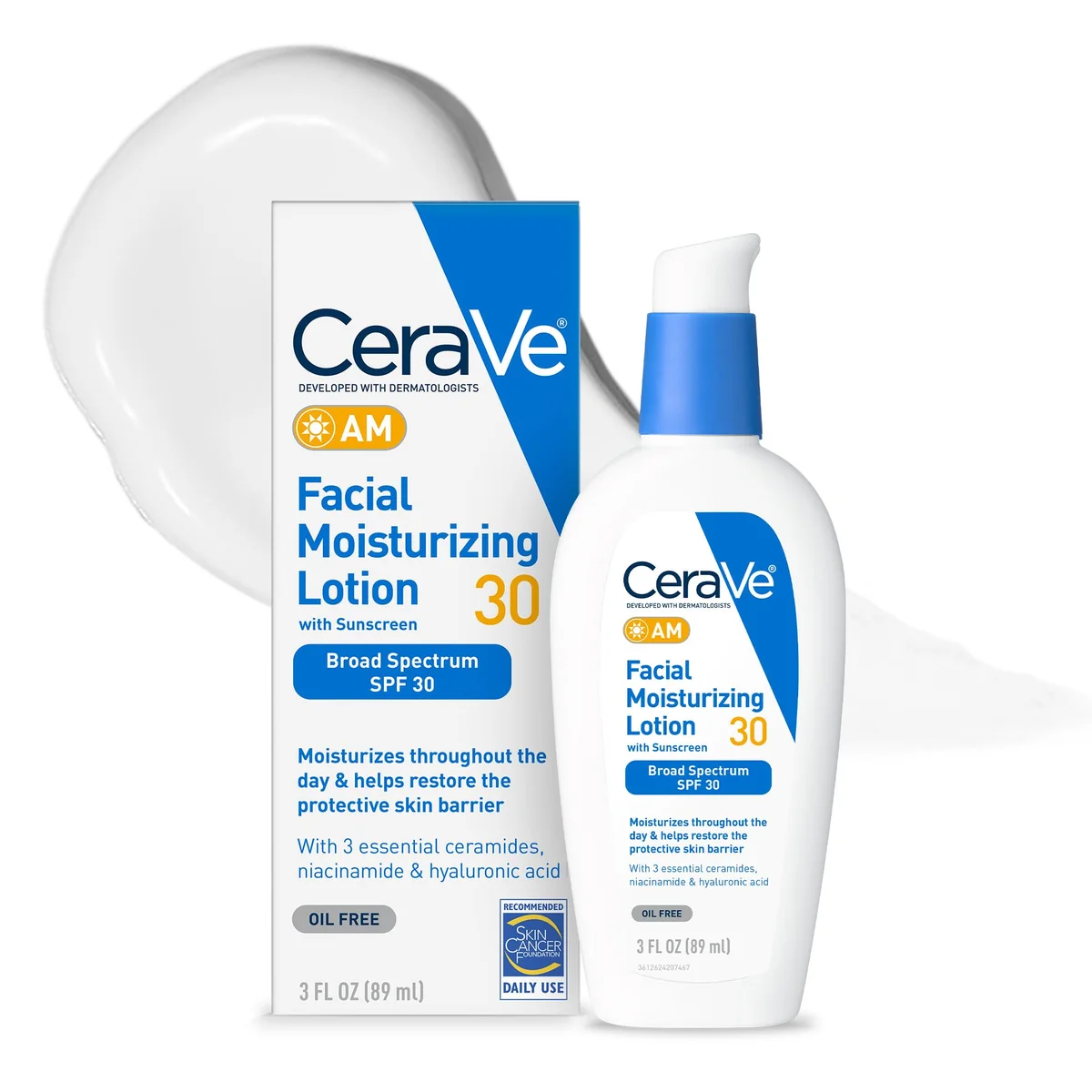
Buy the **CeraVe AM Facial Moisturizing Lotion SPF 30** first. It's the only one of the two doing a job nothing else in your routine covers, daily sun protection plus ceramides, at roughly 15-20 cents a go. The PM is excellent but replaceable. Sunscreen isn't.
Look, the advice you've been handed is "get both, one for morning, one for night," and it's always delivered with the confidence of a man who has never once turned either bottle over. It sounds tidy. Matched pair. AM and PM, like a skincare version of his-and-hers towels.
They're not a pair. One is a sunscreen with moisturiser bolted on. The other is a moisturiser with 4% niacinamide and no sun filters at all. They share a logo, a committee-designed white bottle, and almost nothing else that matters. So the question isn't "should I get both." It's "do I currently own an SPF I actually use?" If the answer's no, everything else is noise.
I've used both for about fourteen months, in rotation and separately, through a London winter that would dry out a lizard and two weeks in Lisbon where I genuinely tested whether SPF 30 survives a terrace at 2pm. (It doesn't, entirely. More on that.) Here's the honest head-to-head, including the part where I admit one of them gets mogged on texture by a $12 Japanese sunscreen.
Featured Products
The winner, and not because it's the nicer-feeling product. It's heavier than premium Japanese SPFs and there's a real white cast on deeper skin tones. But it puts sunscreen, ceramides and niacinamide into one step at roughly 15-20 cents a go, which is why it's the sunscreen men actually use 365 days a year instead of twice a summer. SPF 30 is the floor, though, so outdoor workers should go higher.
It's the only one of the two doing a job no other step in your routine can cover.
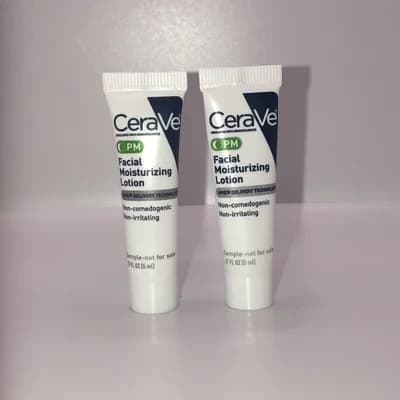
4% niacinamide, honestly labelled, absorbed in under 60 seconds, for about the price of two coffees. I ran it against an $80 night cream for six weeks on opposite halves of my face and couldn't tell them apart, which says more about the $80 cream than it does about this. Too lightweight for genuinely dry skin in winter, and the bottle looks like dental surgery merch.
It's the benchmark for what a night moisturiser has to do, and proof that the premium tier is mostly packaging.
The Short Answer (Before You Scroll)
If you own a sunscreen you use every single morning without having to think about it: buy the PM. It's a better moisturiser than the price suggests and the 4% niacinamide is honestly labelled, which in this category counts as a public service.
If you don't own a sunscreen, or you own one and you "forget" four mornings out of seven: buy the AM. That's it. It's the highest-leverage $15 in male grooming and I'm not being dramatic about that, I'm being boring, which is rather the point.
If you've got genuinely dry skin and live somewhere cold: buy the AM, and buy something richer than the PM for nights. The PM is lightweight. That's a feature for most men and a problem for some.
Who Each One Is Actually For
CeraVe AM is for the man who has never worn sunscreen on a normal Tuesday. Not a beach day. A Tuesday. That's the whole target market and it is enormous. It folds SPF 30, ceramides 1, 3 and 6-II, and an estimated 2-4% niacinamide into one step, which kills the only real excuse men have: "it's another thing to do." It isn't another thing. It replaces your moisturiser.
CeraVe PM is for the man already doing the basics who'd rather his night step wasn't an $80 jar of whipped nothing. Fragrance-free, non-comedogenic, 4% niacinamide, ceramides, hyaluronic acid, absorbs in under a minute. It's the moisturiser equivalent of a well-fitting grey t-shirt. Nobody compliments it. Everything looks better because of it.
> Mariana's Take: Nobody has ever looked at a man and thought "nice moisturiser." They think "he looks rested." The difference between those two sentences is about $70 and the AM one, because sun damage is what actually ages a face.
What's Genuinely Different: SPF 30 vs Nothing
This is the whole comparison, and everyone buries it under texture notes.
The AM has zinc oxide and avobenzone. SPF 30 filters roughly 97% of UVB. The PM has zero sun filters, deliberately, because sunscreen at night is pointless and photostability isn't a concern in a dark bedroom.
So on performance the gap isn't 10% or 20%. It's categorical. One product is doing the single most evidence-backed thing in all of skincare for how your face looks at 50. The other is doing hydration and a decent anti-inflammatory active. Both useful. Only one irreplaceable.
And this isn't vibes, by the way. Daily broad-spectrum sunscreen has proper longitudinal evidence behind it for photoageing, the 2013 Nambour trial being the one everyone cites and the one that actually holds up under scrutiny. Niacinamide at 4% has good evidence for barrier function, some for redness and sebum. Good. Not the same weight class.
The Ingredient Overlap Nobody Mentions
Here's the bit the "buy both" crowd skips: these two formulas overlap a lot. Both have ceramides. Both have niacinamide. Both have hyaluronic acid. Both fragrance-free, alcohol-free, non-comedogenic.
The PM is higher on niacinamide (4% stated versus an estimated 2-4% in the AM, which isn't labelled). The AM is heavier because sun filters add weight. Pull the SPF out of the AM and you've got two fairly similar lotions with different mouthfeel.
Which means if you buy both, you're not getting a morning formula and a night formula. You're getting one sunscreen and one moisturiser that are about 70% the same underneath. Fine. Just don't pretend it's a system.
Real Performance: Texture, White Cast, Absorption
AM: Noticeably thicker. On my skin (combination, oily T-zone, pale enough that white cast is academic) it takes about 90 seconds to stop looking like sunscreen and maybe three minutes to fully settle. There is a faint cast. It's real. On medium to deep skin tones it's more than faint, and I'm not going to soft-pedal that, because the men it affects already know and the men it doesn't should stop arguing with them about it.
PM: Under 60 seconds to absorb, which I've timed, because that is apparently my life now. No slip, nothing on the pillowcase, no greasy film at 7am. It's one of the fastest-absorbing lotions I've used at any price.
Neither has a scent. That matters more than people let on if you wear fragrance, because a scented moisturiser fighting your EDT is one of the quieter own-goals in grooming.
The Morning Test: AM Under Six Hours of Office Lighting
I wore the AM to the agency for a week. Applied around 7:15, checked in a lift mirror at 1pm. By hour three the cast is gone entirely. By hour five there's a mild sheen around the nose and forehead that reads "healthy" in daylight and "slightly damp" under the specific fluorescent horror of a third-floor meeting room. One tissue blot fixes it.
No pilling under a beard. No stinging around the eyes, which is where a lot of chemical sunscreens lose men for good. For an office day with a commute, SPF 30 is plenty. You're not racking up meaningful UV between the Tube and a desk.
The Overnight Test: PM vs the $80 Jar It Replaced
I'd been using a well-reviewed $80 night cream. Smelled faintly of nothing, glass jar with a satisfying heft, the word "renewal" on the lid. So I ran six weeks of PM on one half of my face and the expensive one on the other, which looks exactly as stupid as it sounds.
Six weeks later: no difference I could see or feel. Same hydration in the morning, same lack of tightness, same redness around the nose. The expensive jar had better packaging and a nicer unscrewing sound. That's $65 of unscrewing sound.
And I say this as a man who wants expensive things to be better. Sometimes they are. On this specific job, it wasn't.
Where the AM Falls Down (and the Japanese SPFs That Mog It)
Three honest problems.
1. Texture. Premium Japanese SPF formulas are lighter, dry faster and basically vanish in a way the AM doesn't. Go back to the AM afterwards and it feels like picking up a flip phone. It's not bad. It's 2014 technology at a 2014 price.
2. SPF 30 is the floor. Outdoor work, long drives, high-UV climates: you want SPF 50+. This is a city-commute sunscreen.
3. The cast. Still real. Still worse on deeper skin tones.
It wins anyway, on one metric that outguns all three: you'll actually use it. Every day. Because it's cheap, it's in every chemist on earth, and it doubles as your moisturiser. A perfect sunscreen you apply twice a month loses to a 7/10 sunscreen you apply 365 times a year, and it isn't close. Right?
Where the PM Falls Down (Dry Skin, Winter, Richness)
The PM is lightweight. Normal, oily or combination skin, that's exactly right. Genuinely dry skin in winter, with central heating doing its best Sahara impression, and you'll wake up tight. I did, in January. Fixed it by layering the PM over a hydrating serum, which works fine, but now you've added a step and the simplicity argument starts leaking.
Also: 4% niacinamide is effective, not aggressive. It will not do what a prescription retinoid does. If you're expecting visible texture change in three weeks you've misread the brief. Give it twelve.
And yes, the bottle looks like it came free with a dental appointment. Doesn't matter. I'm only mentioning it because someone always does.
Cost Per Use: The Numbers That Settle It
The PM runs $12-18 and the AM $14-18, depending on size and where you buy.
AM: roughly 15-20 cents per application. One bottle used properly (and properly means more than you think, about two fingers' worth for face and neck) runs two to three months.
PM: similar, call it 12-18 cents a night, and the bottle lasts longer because you use less of it. Against that $80 jar, that's a 90% cost reduction for, in my six-week test, no observable difference.
So cost doesn't settle the choice, because they cost the same. What settles it is what you already own.
Do You Need Both? An Honest Decision Tree
- No sunscreen, no moisturiser → AM only. One product, both jobs, mornings. At night, wash your face and go to bed. You've just done 80% of a skincare routine for $15.
- Already have an SPF you genuinely use daily → PM only. The AM is redundant.
- Have a moisturiser you like, no SPF → AM. Keep using your moisturiser at night.
- Dry skin, cold climate → AM, plus a richer night cream than the PM.
- Oily or acne-prone, want the full setup, $30 budget → Fine, buy both. They layer well and nothing in either will break you out. This is the only scenario where "get both" is the right advice, and notice how specific it has to be.
What to Buy Instead If Neither Fits
If the AM's texture annoys you enough that you'll skip mornings, the answer isn't a different CeraVe, it's a lighter SPF 50 from a brand that does nothing but sunscreen. I'm not naming one here because I haven't put fourteen months into any of them the way I have these two, and I'd rather say that than fake the authority.
If the PM's too light, look for occlusives high up the ingredient list. Shea, squalane, dimethicone. You do not need to spend more than $25 to get it.
Jamie's Verdict
The AM wins, and it wins on a technicality that happens to be the most important thing in the category: it's the one doing the job nothing else can do. The PM is a superb moisturiser and a genuinely funny bit of market evidence that $80 night creams are mostly theatre. But a moisturiser is a nice-to-have. Daily SPF is, and I cannot stress this enough, the highest-return habit available to a man who'd like his face to still look like his face in fifteen years.
Neither will add a point. Together they'll stop your forehead looking like a chip pan by Thursday and stop your face ageing like a pub sofa by 2040. For $30, that's a reasonable trade.
> Mariana's Take: I've watched men spend $200 on a serum and then sit in a beer garden for five hours with nothing on their face. The $15 one you remember beats the $90 one you don't. That's the whole guide.
FAQs
Can I use the AM at night?
You can, it won't hurt you, but you're paying for sun filters you aren't using and it's heavier than you want on a pillowcase. Pointless rather than harmful.
Can I use the PM in the morning?
Yes, if you put a separate sunscreen over it. Without SPF, no. That's the entire distinction.
Is SPF 30 enough?
For an office commute, yes. For outdoor work, long drives or high-UV climates, go SPF 50+. SPF 30 blocks about 97% of UVB, SPF 50 about 98%, and that gap matters far more over long exposure than the numbers make it look.
Will either break me out?
Both are non-comedogenic and fragrance-free. The PM is the safer bet for acne-prone skin purely because there's less going on in it. If the AM's filters disagree with you, that's filter sensitivity, not a CeraVe problem.
How much should I actually apply?
More than you do. Two fingers' length of the AM for face and neck. Under-application is why most men get a fraction of the SPF on the label.
Do I need a serum as well?
Not to start. Lock the sunscreen habit in for three months first. Adding a serum to a routine you don't do yet is just buying a nicer bottle.
Tips
- 1.Use two fingers' length of the AM for face and neck. Most men use about a third of that, get nowhere near the stated SPF 30, and end up with sun damage plus a smug sense of compliance.
- 2.If the white cast bugs you, apply the AM eight to ten minutes before you leave instead of on your way out the door. It settles almost completely in that time and you stop looking faintly embalmed in the lift mirror.
- 3.Dry skin in winter? Don't swap the PM for something heavier. Put a hydrating serum underneath it. You keep the 4% niacinamide and the fast absorption, and you fix the tightness for about $10 extra.
The Bottom Line
Buy the CeraVe AM SPF 30 first, every time, unless you already own a sunscreen you genuinely use every morning. The PM is the better-feeling product and a brilliant argument against $80 night creams, but it's replaceable and the AM isn't. If you've got $30 and oily or combination skin, get both and stop thinking about it. That's your whole routine sorted for the price of a decent lunch.
Frequently Asked Questions
Do I need both CeraVe AM and CeraVe PM moisturiser?
Can I use CeraVe PM in the morning instead of the AM?
Is CeraVe AM SPF 30 enough sun protection?
Does CeraVe AM leave a white cast?
Is CeraVe PM as good as an expensive night cream?
Is CeraVe PM moisturising enough for dry skin?
How much CeraVe AM should I apply?
Related Guides
VS
Philips OneBlade Pro vs Traditional Trimmer: Which One Actually Belongs in Your Bathroom
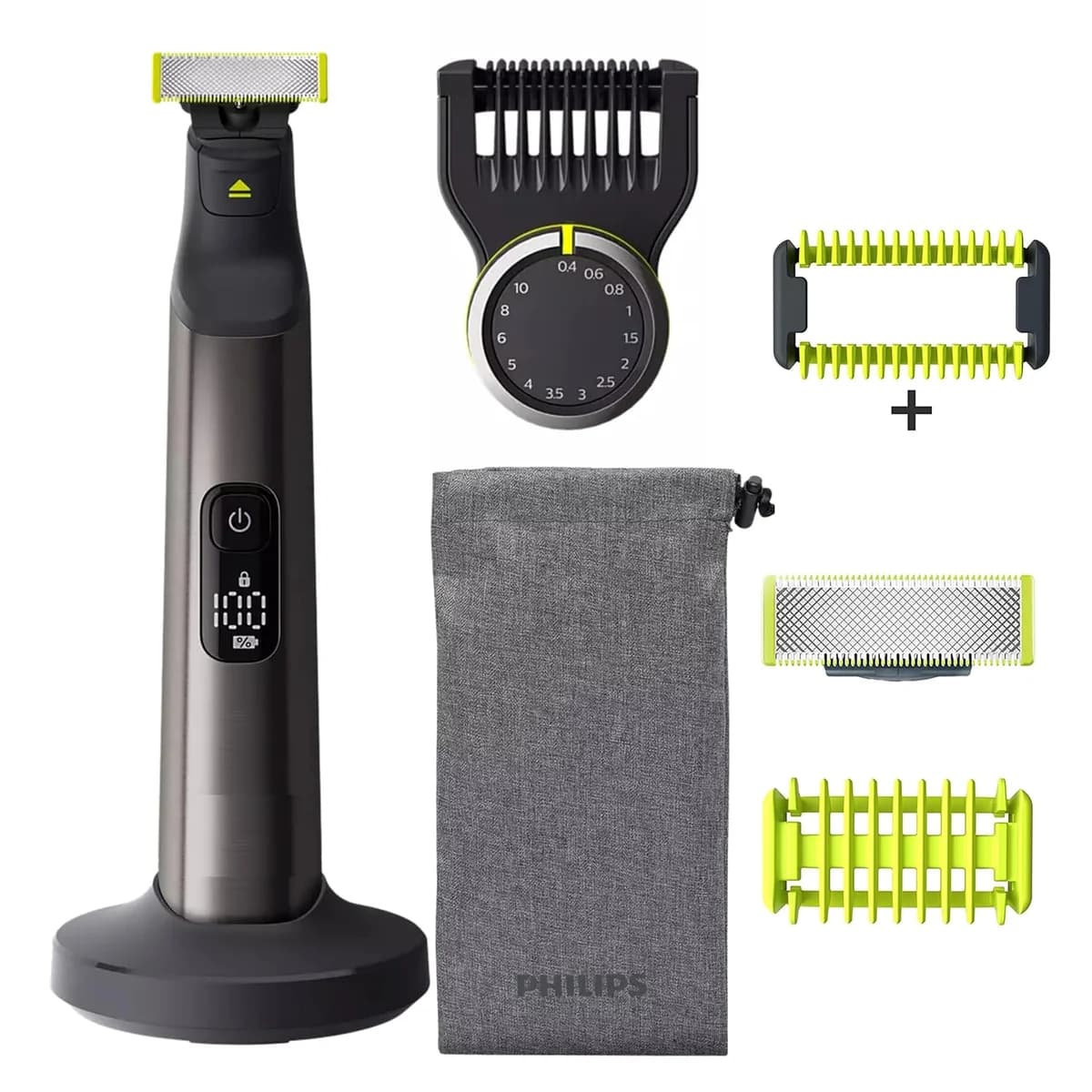
For most men, the Philips Norelco OneBlade Pro is the better daily tool - it handles beard maintenance, edging, and neck shaving in one pass without any real learning curve. But if you're cutting your own hair at home and want to actually stop paying $50 a month at the barber, the Wahl Clipper Elite Pro pays for itself faster and does one job extremely well. Different tools, different briefs.
VS
Safety Razor vs Cartridge Razor: Which Actually Gives You a Better Shave in 2026?
The Merkur 34C paired with Astra Superior Platinum blades wins on shave quality, skin health, and long-term cost. The single-blade geometry cuts ingrown hairs meaningfully versus multi-blade cartridges, and your running cost drops to roughly $8-16 a year once you're past the two-to-four week learning curve. If you can handle three weeks of slightly worse shaves while your technique catches up, you'll never go back to paying $5 a head for Fusion5 cartridges.
BEST OF
Best Moisturizers for Men 2026: From Drugstore Heroes to Premium Flex
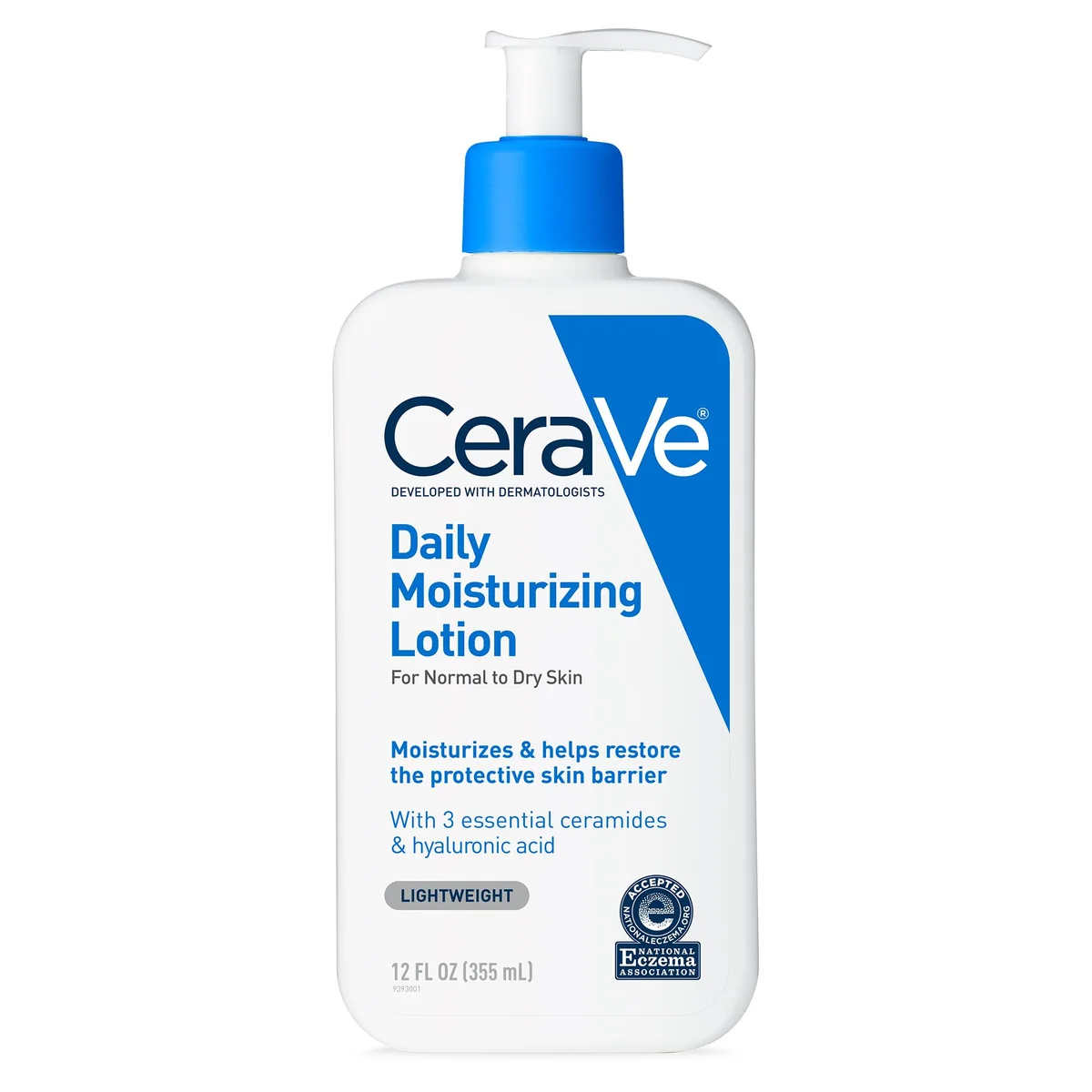
CeraVe Daily Facial Moisturizing Lotion with SPF 30 is the best moisturizer for most men right now - ceramide-backed barrier repair, SPF 30, dermatologist-tested formula, $14. It does what moisturizers costing five times more do, and it does it in the morning step you were already taking. If you use nothing else from this guide, use this.