
BEST OF
Best Safety Razor Blades 2026: How to Choose Double-Edge Blades by Sharpness and Skin Type
Seven blades ranked — because your face deserves better than a subscription scam.
Last updated: August 25, 2026
Quick Answer
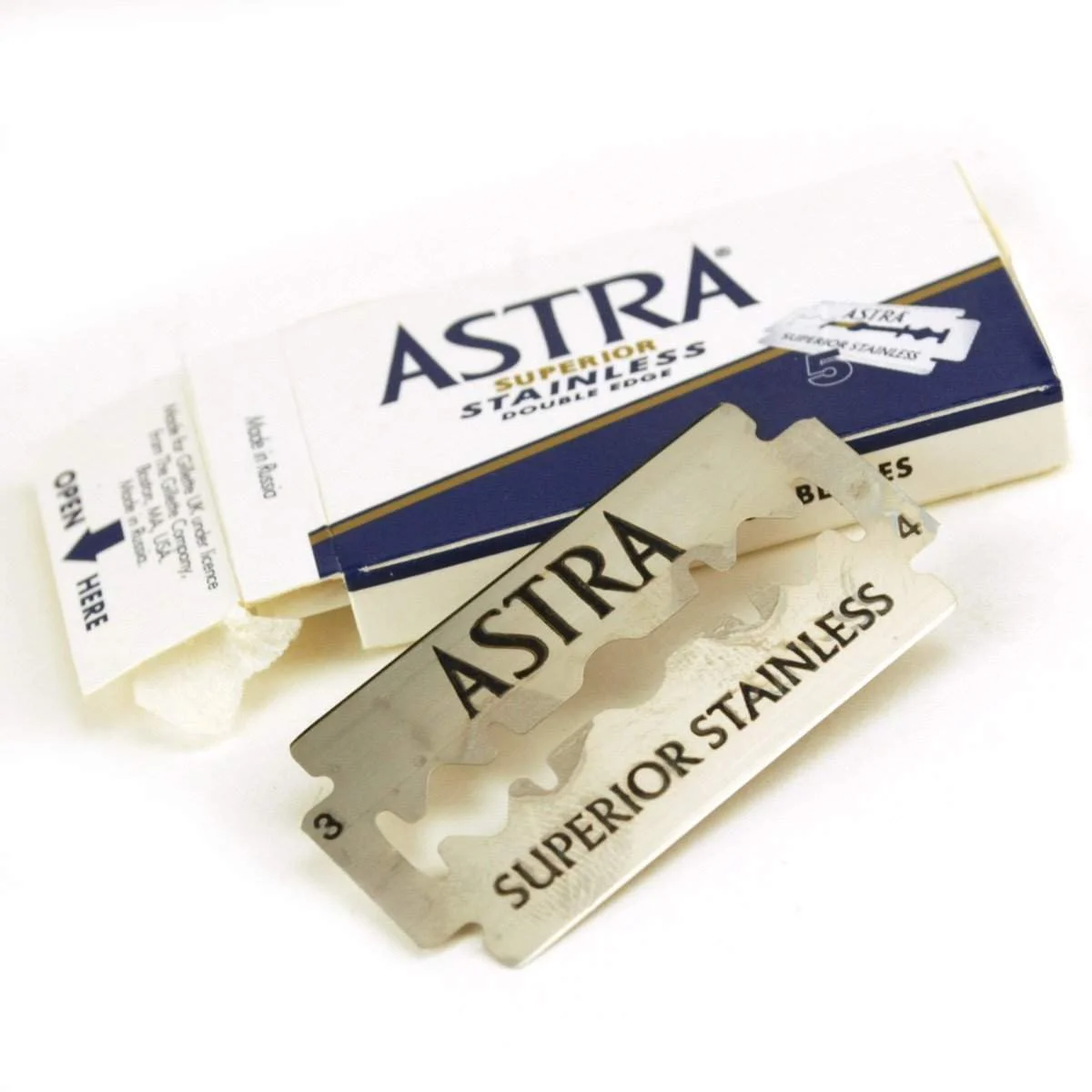
The Astra Superior Platinum is the right blade for most men: sharp enough to actually do the job, forgiving enough that you won't bleed through your first three shaves, and so cheap per use that switching from cartridges feels like catching Gillette with their hand in your wallet. Start here unless you've already got technique locked - in which case, upgrade to Feather Hi-Stainless.
Here's the thing nobody tells you about safety razors: the razor is largely irrelevant. The handle is the venue. The blade is the act. You can spend $230 on a hand-turned brass handle with the weight distribution of a Swiss chronograph, and if you load a blade that doesn't match your beard coarseness and your current skill level, you will shave like someone trying to wallpaper with a cricket bat.
The internet, bless it, has not helped. Safety razor forums are either purist flame wars about Japanese steel tolerances or suspiciously enthusiastic manufacturer copy dressed up as reviews. Neither tells you what you actually need to know, which is: given my face, my beard, and whether I've been doing this for three weeks or three years, which blade should I be using right now? That's what this guide is for.
We've mapped six blades across the full sharpness spectrum - from Derby Extra (the 'hello, I am new here' blade) to Feather Hi-Stainless (the 'I know exactly what I'm doing and I have the technique to prove it' blade) - against skin types, beard coarseness, and experience levels. We've also included the Merkur 34C because buying the right blade and then loading it into the wrong razor is a particular kind of disappointing. The cost-per-shave maths is in here too, and it is, genuinely, embarrassing for the cartridge industry.
Featured Products
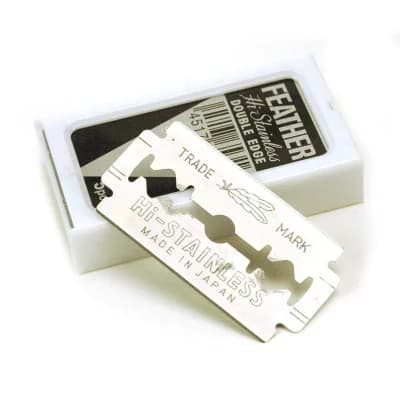
The sharpest production DE blade available, and the one that actually justifies the BESS score conversation. Genuinely transformative for experienced shavers with fine-to-medium beards - but punishing for anyone who hasn't earned it with technique first. Not a starting point. An aspiration you work toward.
The premium end of the sharpness spectrum - essential reference point for experienced shavers and the blade most DE enthusiasts eventually try.
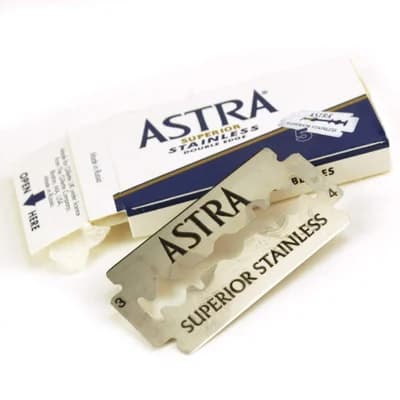
The blade that makes the safety razor switch argument actually stick. Sharp enough to do the job properly, forgiving enough to survive the learning curve, and so cheap per shave that the economics become impossible to argue with after about thirty seconds. The right starting point for most men - and, if we're honest, the right long-term blade for more of them than will admit it.
The best all-round DE blade for most face types, technique levels, and budgets - the guide's clear practical recommendation for the majority of readers.
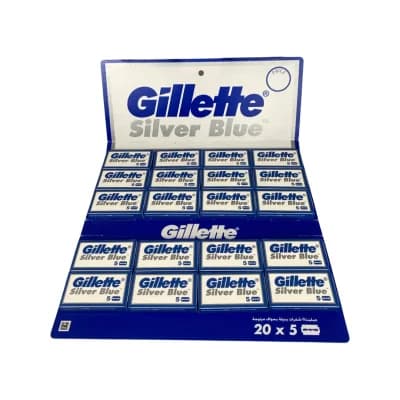
The blade wet shavers actually use once they stop trying to prove something. Sits in the most practically useful position on the aggression spectrum - sharper than Derby, more forgiving than Feather - and delivers it with the most consistent shave-to-shave reliability in the category.
Best consistency record in the category and the natural graduation point for men who've outgrown Astra SP but don't need Feather-level sharpness.
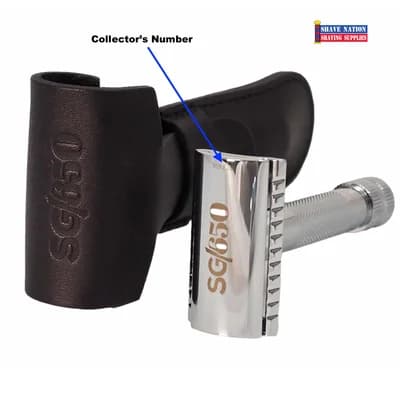
Not a blade, but the blade guide doesn't work without acknowledging the vessel. The 34C is the right starting razor for most men: forgiving closed-comb geometry, lifetime construction, and total annual blade costs that make the Fusion5 pricing model look like what it is. Load the right blade into this and the whole system clicks.
The hardware context the blade guide requires - the recommended entry-point razor that makes the blade economics actually function.
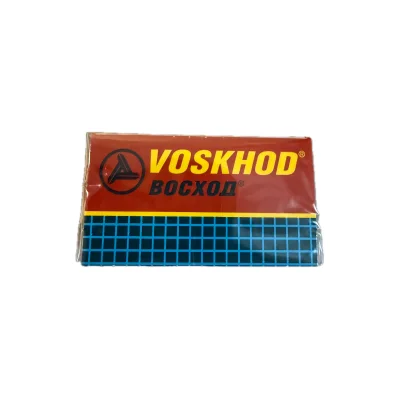
A hundred shaves for less than a tenner, with Teflon smoothness that genuinely helps beginners learn without punishing every pressure error. The Teflon fades after shave two and experienced shavers will find it underwhelming, but as a first blade and a bulk-buy safety net it earns its place completely.
Best beginner blade and the most cost-efficient option in the guide - the right recommendation for week-one DE converts on tight budgets.
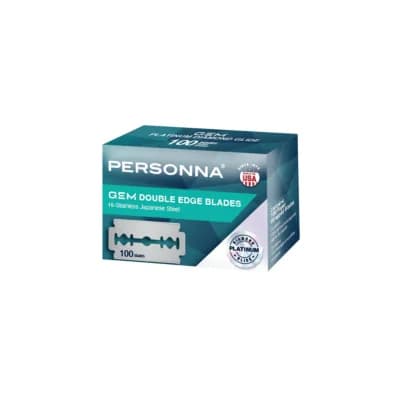
Medical-grade edge consistency at cartridge-grade pricing, with a PTFE coating that genuinely helps sensitive skin shavers reduce cumulative drag irritation. Not the sharpest blade here, but the most sensible choice for reactive skin once technique is developing.
The specific recommendation for sensitive skin men who want genuine edge consistency without Feather-level sharpness risk.
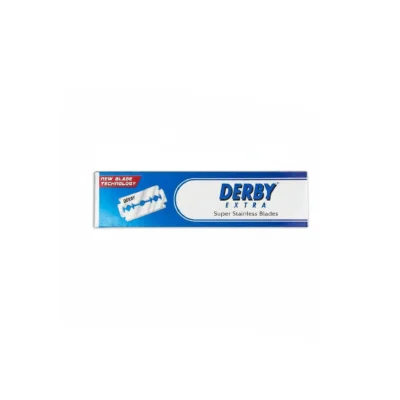
The mildest widely available DE blade and the right starting position for absolute beginners or sensitive skin types encountering DE shaving for the first time. You will outgrow it within two months - that's not a problem, that's the product working exactly as intended.
The gentlest entry point on the sharpness spectrum - the guide's recommendation for week-one beginners and reactive skin starting out.
The Blade Choice Is the Shave Quality (The Razor Is Just the Venue)
Cartridge razor culture has trained an entire generation of men to think the handle is the product. Gillette sells you the Fusion5 system. The blades are the afterthought. In double-edge shaving, this logic inverts completely.
A $40 Merkur 34C with the right blade will outperform a $195 vintage razor loaded with the wrong one. The blade determines edge geometry, cutting angle, drag coefficient, and how much skin trauma you accumulate across three passes. The razor determines how much of that behaviour you can control. Get both right and you're getting a close, irritation-free shave for roughly 3-5 pence. Get either wrong and you're back to cartridges within a fortnight, which is exactly what Gillette's business model is banking on.
---
The Sharpness Spectrum Explained: From Derby Extra to Feather - What the BESS Scores Actually Mean
BESS stands for Blade Edge Sharpness Scale, and it measures the force (in grams) required to cut a standardised filament. Lower score equals sharper blade. This is not marketing copy. This is physics.
The practical range for double-edge blades runs roughly like this:
- Feather Hi-Stainless: 40-60g - sharpest production blade commercially available
- Gillette Silver Blue / Astra SP: 70-100g range - mid-spectrum, most practical for most men
- Personna Lab Blue: similar to mid-spectrum, with medical-grade edge consistency
- Voskhod Teflon Coated: mid-range, Teflon smooths the first pass considerably
- Derby Extra: 100-150g range - mildest of the mainstream options
The mistake most people make reading this is assuming sharper equals better. It does not. Sharper equals less forgiving. A Feather blade on a new DE shaver with cartridge-trained pressure habits is a recipe for a very humbling Tuesday morning. A Derby Extra in the hands of someone who's been doing this for two years is just drag. Sharpness is a privilege you earn with technique, not a starting position.
---
How to Match a Blade to Your Skin Type and Beard Coarseness
Before you look at a single product, work out where you are on these two axes.
Skin sensitivity:
- Reactive skin (redness, razor burn, ingrown tendency): start mild, prioritise PTFE-coated blades, avoid Feather until your technique is locked
- Normal-to-resilient skin: mid-spectrum blades work from day one
- Resilient skin with coarse growth: you need sharpness, or you're doing extra passes, which defeats the whole point
Beard coarseness and density:
- Fine-to-medium beard: any blade works; sharpness becomes about preference
- Medium-coarse: Astra SP minimum; Derby will drag by shave three
- Dense and fast-growing: Feather or Gillette Silver Blue; anything milder means you're doing four passes where two would do
Experience level:
- Week one to month two: Derby Extra or Voskhod
- Month two onwards with improving technique: Astra SP or Personna Lab Blue
- Six months plus with consistent results: Gillette Silver Blue or Feather
With that map in hand, here's what each blade actually is.
---
1. Feather Hi-Stainless - Best for Experienced Shavers, Fine-to-Medium Beard, Confident Technique
Best for: Men who've been wet shaving for at least six months, have consistent angle control, and are working with fine-to-medium beard texture. Also the correct choice if you want two passes to do what three passes used to.
Family / Category: Premium Japanese DE blade, sharpest in mainstream production
Performance: BESS scores of 40-60g put this in a different league from budget alternatives sitting at 100-150g. In practical terms: fewer passes, less cumulative skin friction, noticeably cleaner result on fine hair. The edge degradation is real though - shave three starts to feel different, and by shave four most users are past optimal. Japanese manufacturing consistency means the blade you pull from position one of the pack performs identically to position 100. Blade-to-blade variance is essentially zero, which matters more than most people realise.
The caveat, and it's not a small one: this blade has no forgiveness for sloppy technique. Incorrect angle or cartridge-trained pressure habits don't produce mild irritation - they produce nicks that commit fully. This is not a beginner blade. It is not a 'I'm mostly doing well' blade. It's the blade you reach for once you've stopped having to think about your angle.
Price: Approximately $0.10-0.13 per shave at 3-4 uses per blade. Budget pricing, premium performance - the economics are fine.
> Mariana's Take: When a man has genuinely good skin and a clean, close shave, you notice. Not because he's wearing it - because the absence of irritation and patchiness just reads as baseline competence. Feather blades used correctly are doing real work there.
Pros:
- Consistently sharpest DE blade in production - BESS 40-60g vs 100-150g for budget options
- Fewer passes means less cumulative friction redness
- Near-zero blade-to-blade variance - Japanese manufacturing consistency is genuinely exceptional
- $0.10-0.13 per shave
Cons:
- Zero technique forgiveness - poor angle control produces nicks, not mild irritation
- Not suitable for aggressive razors unless pressure control is fully internalised
- Edge degradation after shave three is noticeable - longevity is shorter than Astra SP at comparable shave quality
---
2. Astra Superior Platinum - Best for Intermediate Shavers, Most Skin Types, Best All-Round Value
Best for: Men 2-3 weeks into DE shaving and beyond. Works across normal, combination, and moderately sensitive skin. The practical first blade upgrade once you've survived the Derby Extra learning period.
Family / Category: Mid-spectrum platinum-coated DE blade
Performance: Sharper than Derby, smoother than Feather - which sounds like a cop-out but is actually the most useful position on the spectrum for most faces. The platinum coating delivers genuine drag reduction versus uncoated steel and extends blade life to 3-5 shaves without the sharp performance drop you get with cheaper alternatives. Manufactured under Gillette quality control, which means batch-to-batch consistency is notably better than budget no-name blades.
The economics are, frankly, embarrassing for the cartridge industry. Cost-per-shave of $0.03-0.05. A 100-blade pack typically runs $8-12. Do the arithmetic against Fusion5 cartridges and you'll feel something between satisfaction and mild anger.
Price: $0.03-0.05 per shave. Best overall value in the category.
Pros:
- Cost-per-shave makes cartridge pricing look like a subscription scam
- Mid-spectrum sharpness suits most face types and technique levels
- Platinum coating extends life and reduces drag versus uncoated alternatives
- Gillette manufacturing oversight means consistent quality batch-to-batch
Cons:
- 2-3 week learning curve before technique catches up to the shave quality available
- 3-5 shave lifespan is shorter than Gillette Silver Blue for heavier shavers
- Needs a compatible DE safety razor - this is not a standalone upgrade for a cartridge user
---
3. Gillette Silver Blue - Best for Regular Shavers Who Want Consistency Over Excitement
Best for: Men who've moved past the learning curve, shave four or more times a week, and want a blade that performs identically every time without requiring mental effort. The blade you stop noticing because it just works.
Family / Category: Mid-to-premium DE blade, consistency-focused
Performance: Sharper than Derby Extra, more forgiving than Feather - which places it in exactly the zone where most experienced DE shavers live permanently. The real story here is the consistency: shave-to-shave performance across three to five uses is among the most reliable in the category. Works well across mild and moderate-aggressive safety razors without requiring technique adjustment between razors, which matters if you own more than one handle. And you will own more than one handle, eventually. You'll feel slightly ridiculous about it. But here we are.
At roughly $0.05-0.07 per shave versus $0.90 per shave for Gillette Fusion cartridges, the value case makes itself. The caveat for heavier shavers: coarse beard growth or longer stubble between shaves drops lifespan to three shaves, which means burning through packs faster than the maths initially suggested.
Price: $0.05-0.07 per shave. Strong value, especially given the longevity advantage over Astra SP for lighter beards.
> Mariana's Take: There's a specific kind of man who's been quietly using the same blade for eighteen months without mentioning it once. Gillette Silver Blue is almost always what he's using. That's either a recommendation or a personality observation - both, probably.
Pros:
- Consistent shave-to-shave performance across three to five uses - most reliable in the category
- Works across mild and moderate-aggressive razors without adjustment
- $0.05-0.07 per shave versus $0.90 for Fusion cartridges
- Sharper than Derby, more forgiving than Feather - the most practically useful position on the spectrum
Cons:
- Coarser beards reduce lifespan to three shaves - heavier shavers burn through packs faster than expected
- Upfront razor investment required before the economics make sense
- Blade preference is genuinely individual - some users simply perform better with Astra or Feather regardless of Silver Blue's general reputation
---
4. Personna Lab Blue - Best for Sensitive Skin, Medical-Grade Edge Without the Feather Risk
Best for: Men with reactive or sensitive skin who want a sharp, consistent edge without the unforgiving nature of Feather. Also the right call for anyone who's found mid-range blades producing irritation and isn't sure whether it's the blade or technique.
Family / Category: Medical-grade PTFE-coated DE blade
Performance: Manufactured to medical and laboratory tolerances - meaning edge consistency is genuinely exceptional for the price point. The PTFE coating reduces drag noticeably compared to uncoated DE blades, which matters considerably for sensitive skin where drag accumulates into irritation across three passes. Longevity caps at three to five shaves on medium-coarse hair, which is below Feather, but for sensitive skin men the trade-off is correct: more consistent, less aggressive, better suited to technique that's still developing.
At $0.03-0.05 per shave and available in 100-blade packs, you're not rationing swaps or second-guessing whether that blade has one more shave in it. Swap it. It costs less than a Haribo.
Price: $0.03-0.05 per shave. 100-blade packs available. Mathematically embarrassing for competitors.
Pros:
- Medical and laboratory manufacturing tolerances - edge consistency is genuinely exceptional
- $0.03-0.05 per shave versus $4.50 per cartridge
- PTFE coating reduces drag - noticeably better for sensitive skin
- 100-blade packs mean you never need to ration a dulled blade
Cons:
- Longevity below Feather or Gillette Silver Blue on medium-coarse hair
- Requires a DE safety razor - incompatible with cartridge systems
- Not the sharpest available; very coarse or fast-growing beards may find it underwhelming
---
5. Voskhod Teflon Coated - Best for Complete Beginners, High-Volume Shaving, Tight Budgets
Best for: Men in week one of DE shaving who are still calibrating pressure and angle. Also correctly priced for anyone who wants a bulk-buy safety net while their technique develops.
Family / Category: Budget Teflon-coated DE blade
Performance: The Teflon coating delivers genuinely smooth first-pass glide - noticeably less drag than uncoated budget blades, which matters when you're learning and your pressure control isn't instinctive yet. Mid-range sharpness pairs well with most safety razors without punishing beginner mistakes. Blade-to-blade consistency within a pack is solid - a real issue with some cheaper alternatives that borders on a blade lottery.
The honest limitation: the Teflon benefit fades after shave two. From shave three onward you're essentially shaving with a standard steel edge, which means the drag advantage you bought disappears on the same day you'd otherwise be getting comfortable. For a beginner this is fine - you're swapping blades frequently while learning anyway. For an experienced shaver with coarse growth who wants four comfortable shaves per blade, look elsewhere.
At 100 blades for $8-12, this is approximately 400 shaves for the price of two cartridge refill packs. The cartridge industry would very much prefer you didn't do that maths.
Price: $8-12 per 100 blades. Lowest cost-per-shave in the guide.
Pros:
- 100 blades for $8-12 - approximately 400 shaves for the price of two cartridge refill packs
- Teflon coating delivers smooth first-pass glide, noticeably reducing drag
- Mid-range sharpness doesn't punish beginner technique
- Consistent blade-to-blade quality with minimal variance
Cons:
- Teflon benefit fades after shave two - standard steel edge from shave three onward
- Not sharp enough for dense, coarse beard growth without extra passes
- Requires a safety razor - initial hardware investment is a real barrier
---
6. Derby Extra - Best for Absolute Beginners and Sensitive Skin Starting Out
Best for: Men in their first two weeks of DE shaving, particularly those with sensitive or reactive skin. The blade designed specifically to not embarrass you while you're learning what a 30-degree angle actually feels like in practice.
Family / Category: Budget mild-spectrum platinum-coated DE blade
Performance: The mildest widely available DE blade. Platinum coating extends life past uncoated steel alternatives and the BESS profile (100-150g range) means sloppy technique produces mild irritation rather than the enthusiastic nicking you'd get from a Feather at the same skill level. Consistent manufacturing quality across batches - no blade lottery.
The limitation is also the point: experienced DE shavers will find drag noticeable by shave three on any beard coarser than fine, and will graduate to Astra SP or Silver Blue within two months. That's not a flaw in the product - that's the product doing exactly what it should. Derby Extra is a starting position, not a destination.
At approximately $0.07 per blade at 100-count, the per-shave economics are fine. The blade that makes cartridge pricing look like an actual crime, as we've been noting throughout.
Price: Approximately $0.07 per blade. Strong beginner economics.
Pros:
- Mild sharpness profile significantly reduces beginner nicks versus Feather
- Approximately $0.07 per blade at 100-count
- Consistent manufacturing quality - no blade lottery
- Platinum coating extends life past uncoated alternatives
Cons:
- Noticeable drag for men with coarser or denser beard growth by shave three or four
- Experienced DE shavers will outgrow this quickly
- 3-5 shave lifespan per blade is on the shorter end
---
Also Worth Knowing: The Merkur 34C - The Razor That Makes These Blades Actually Work
Blades without the right razor is a genuinely incomplete conversation. The Merkur 34C is the most recommended beginner-to-intermediate DE handle for a reason: the closed-comb head geometry is forgiving enough to absorb early technique errors while still delivering a close shave, and the 79g chrome zinc alloy construction means this is the last razor-adjacent purchase you'll make for approximately the rest of your life.
At $38-45 and paired with the right blade, the total outlay for a superior shave is under $60 including a 100-pack. A single month of Fusion5 cartridges costs more. The blade habit from here runs roughly $8-16 per year. The maths on this is not subtle.
The honest caveats: the 84mm handle is on the shorter side for larger hands - the Edwin Jagger DE89 or a longer-handled alternative suits better if that's you - and the learning curve of 2-4 weeks to unlearn cartridge-razor pressure habits means early nicks are probable. It's also not adjustable. For men with coarse, fast-growing or directionally inconsistent growth, an adjustable razor gives more tailoring options than the 34C can provide.
But as the standard entry point for DE shaving, it remains the correct recommendation. Load it with an Astra SP after two weeks on Derby Extras, and you've assembled a shaving setup that a man twice your budget can't outperform without doing something medically inadvisable.
---
The Blade Sampler Strategy: Why You Should Buy a Mixed Pack Before Committing
Blade preference is genuinely individual in a way that forum recommendations cannot account for. Your sebum production, beard texture, skin pH, and current technique level interact with blade geometry in ways that make someone else's enthusiastic Feather endorsement largely useless information for your specific face.
Blade sampler packs - typically five to ten blades across six to eight different brands - cost $10-20 and give you the empirical answer rather than the forum mythology. Buy one. Use each blade for three shaves across three separate sessions, note what happened (close shave, irritation, drag, nicks), and then buy 100 of what worked.
This is not a complicated strategy. It's just the one most people skip because buying a 100-pack of something feels decisive, and skipping the sampler feels like knowing what you're doing. It is not knowing what you're doing. It's impatience with an $10 upfront cost.
---
Cost-Per-Shave vs Cartridge Razors: The Maths That Makes Gillette's Pricing Team Very Nervous
Look, let's just be straightforward about this:
- Gillette Fusion5 cartridge: approximately $0.90 per shave (cartridge lasts 5-8 shaves at $5-7 per cartridge)
- Astra Superior Platinum: approximately $0.03-0.05 per shave
- Feather Hi-Stainless: approximately $0.10-0.13 per shave
- Voskhod Teflon Coated: approximately $0.02-0.03 per shave
- Gillette Silver Blue: approximately $0.05-0.07 per shave
If you shave four times per week with a Fusion5 cartridge, you're spending roughly $190 per year on blades alone. The equivalent DE habit - even at the premium end with Feather - runs $20-32 per year. The Merkur 34C amortises over a decade. The Edwin Jagger you might upgrade to in year two amortises over two decades.
This is not a marginal saving. It's a structural one. And the shave quality - once technique is developed - is better. One blade, no clogging, no plastic, no five-blade 'moisture strip' theatre.
The reason most men don't switch is not the economics. It's the learning curve, and the fact that Gillette's distribution is genuinely excellent and their marketing budget is enormous. Both are real. Neither is a reason to keep paying $0.90 per shave.
---
Jamie's Final Verdict: Which Blade to Start With, and When to Graduate
Start with: Derby Extra or Voskhod Teflon Coated for the first two to three weeks. Not because they're the best blades - they're not - but because learning DE technique on a forgiving blade means your face pays a lower tuition fee. Load these into whatever razor you're starting with (Merkur 34C if you're asking), use them for a fortnight, and pay attention to what angle and pressure feel like when you're not bleeding.
Graduate to: Astra Superior Platinum once you've stopped nicking yourself consistently. This is the blade the economics argument is actually built on, and the one most men end up staying with indefinitely. Not because it's the sharpest - it isn't - but because it's sharp enough, forgiving enough, and cheap enough that there's no compelling reason to move on unless your beard or your ambition demands it.
Eventually consider: Feather Hi-Stainless once your technique is genuinely locked and you're working with fine-to-medium beard texture. Or Gillette Silver Blue if consistency matters more than maximum sharpness. Or Personna Lab Blue if your skin has been the limiting factor throughout and you want medical-grade edge consistency without the Feather risk.
The whole system - razor, blade, technique - takes about six weeks to click. Until it clicks, you'll think cartridges were fine. Once it clicks, you'll be quietly irritated you waited this long. That's not enthusiasm speaking. That's just what happens when the maths, the skin results, and the ritual all land in the same place at the same time.
Tips
- 1.Buy a blade sampler pack ($10-20 for six to eight blade varieties) before committing to a 100-pack. Your beard texture, skin pH, and current technique level interact with blade geometry in ways that make forum recommendations essentially useless for your specific face. Three shaves per blade, take notes, then bulk-buy what worked. I cannot stress this enough: the sampler is not optional.
- 2.Load Derby Extra or Voskhod for your first two to three weeks specifically to learn pressure and angle on a forgiving edge. Once you've stopped nicking yourself consistently, upgrade to Astra SP. The temptation to start with Feather because the BESS scores are impressive is understandable and, genuinely, a mistake.
- 3.Track shaves per blade rather than days per blade. A blade used once every three days lasts longer in calendar time but the same number of shaves - and shave count, not calendar time, is what determines edge degradation. Swap on shave four or five for mid-range blades regardless of when that falls in the week.
The Bottom Line
Start with Derby Extra or Voskhod while your technique develops, graduate to Astra Superior Platinum once you stop producing evidence on your face, and reassess from there based on beard coarseness and how ambitious you're feeling. Right? The Astra SP is where most men land permanently - it's sharp enough, forgiving enough, and costs so little per shave that the case for cartridges simply collapses. Everything else in this guide is either a starting point you'll move through or a destination you'll earn.
Frequently Asked Questions
What is the sharpest double-edge razor blade you can buy?
What are the best double-edge razor blades for sensitive skin?
How much do double-edge razor blades cost compared to cartridge razors?
What double-edge blades should a beginner start with?
Are Astra Superior Platinum blades actually good, or are they just popular because they're cheap?
What is the difference between Gillette Silver Blue and Astra Superior Platinum double-edge blades?
Related Guides
BEST OF
Best Safety Razors for Men 2026: The Merkur 34C and the Beginner DE Kit That Actually Works
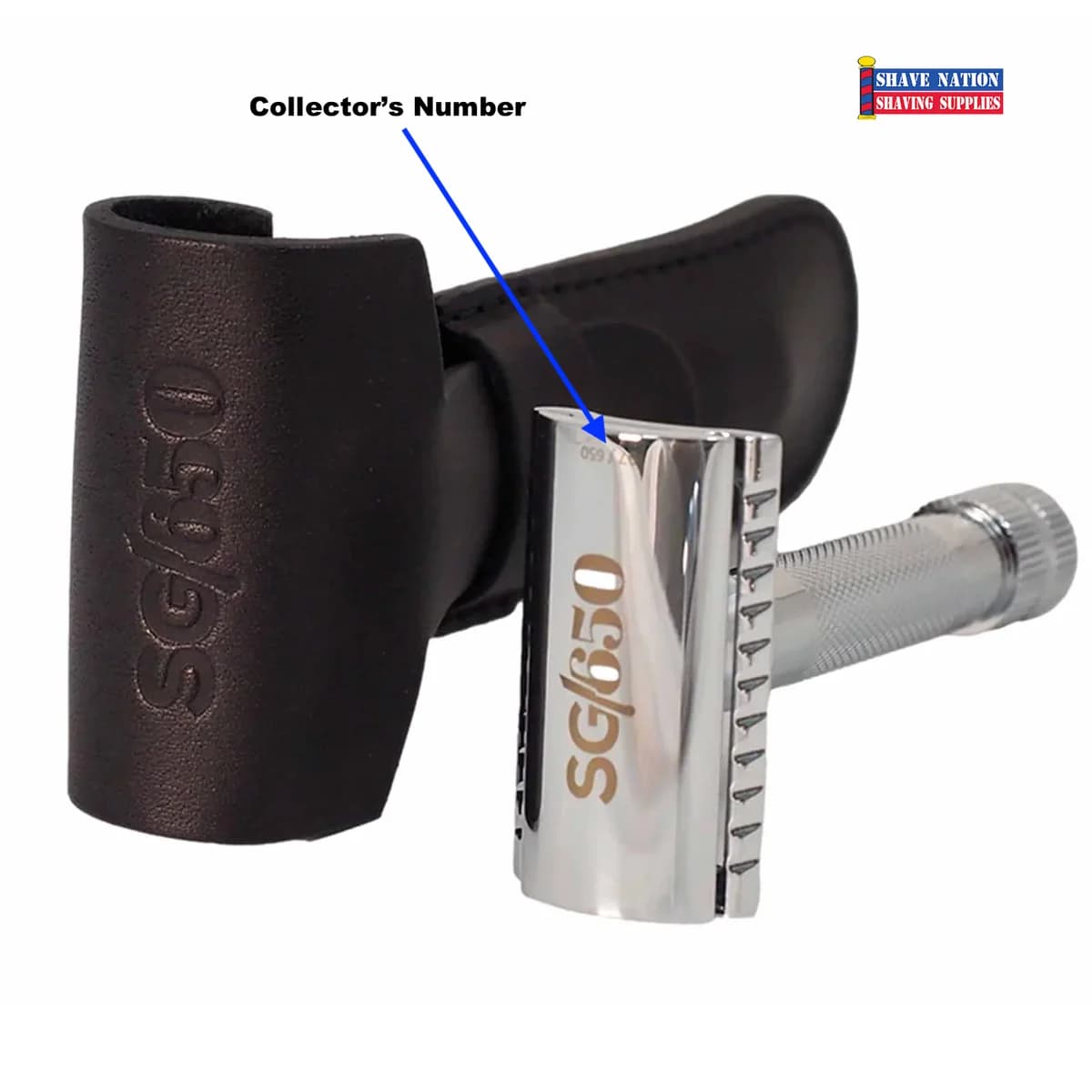
The Merkur 34C paired with Astra Superior Platinum blades is the best beginner DE setup in 2026. The razor costs around $40, lasts a lifetime, and with blades running about $0.03-0.05 each, you're looking at roughly $8-13 a year on blades versus $65+ for Fusion5 cartridges. There's a two-to-four week learning curve and you will nick yourself. Still worth it.
BEST OF
Best Aftershaves for Men 2026: Splash vs Balm, Ranked by Skin Type
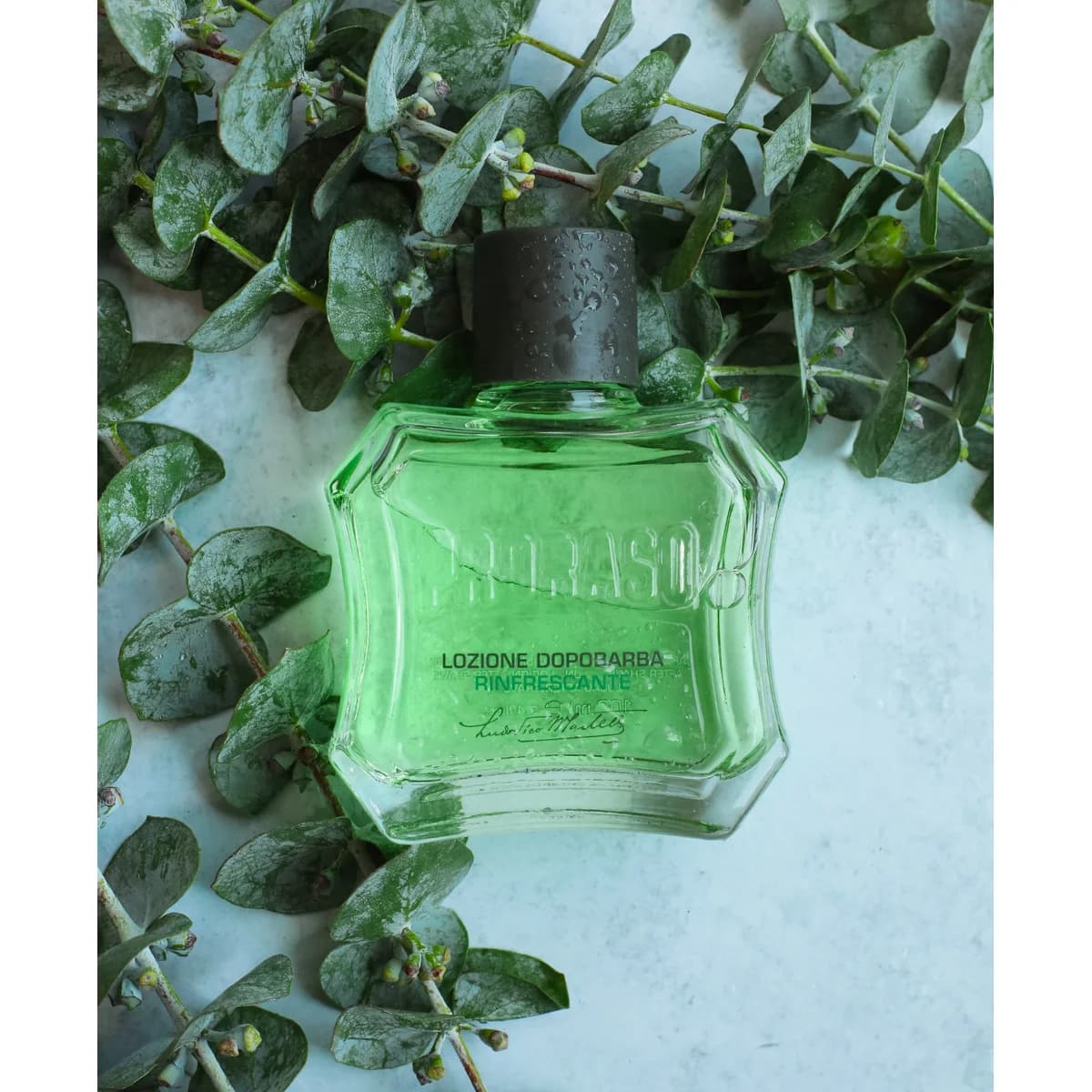
For most men, the Proraso Aftershave Lotion Refresh Green is the best splash going - consistent formula since 1948, pennies per shave at the 400ml size, and genuine menthol-eucalyptus cooling that actually reduces razor irritation rather than just smelling medicinal. If your skin leans dry or sensitive, skip it entirely and go straight to the Nivea Men Sensitive Post Shave Balm - alcohol-free, absorbs in under two minutes, and outperforms balms costing three times as much.