
COMPARISON
American Crew Fiber vs Matte Clay: Which Texture Product Actually Suits Your Hair ($16–$26)
Fiber head-to-head against the matte clays worth buying, by hair type
Last updated: October 21, 2026
Quick Answer
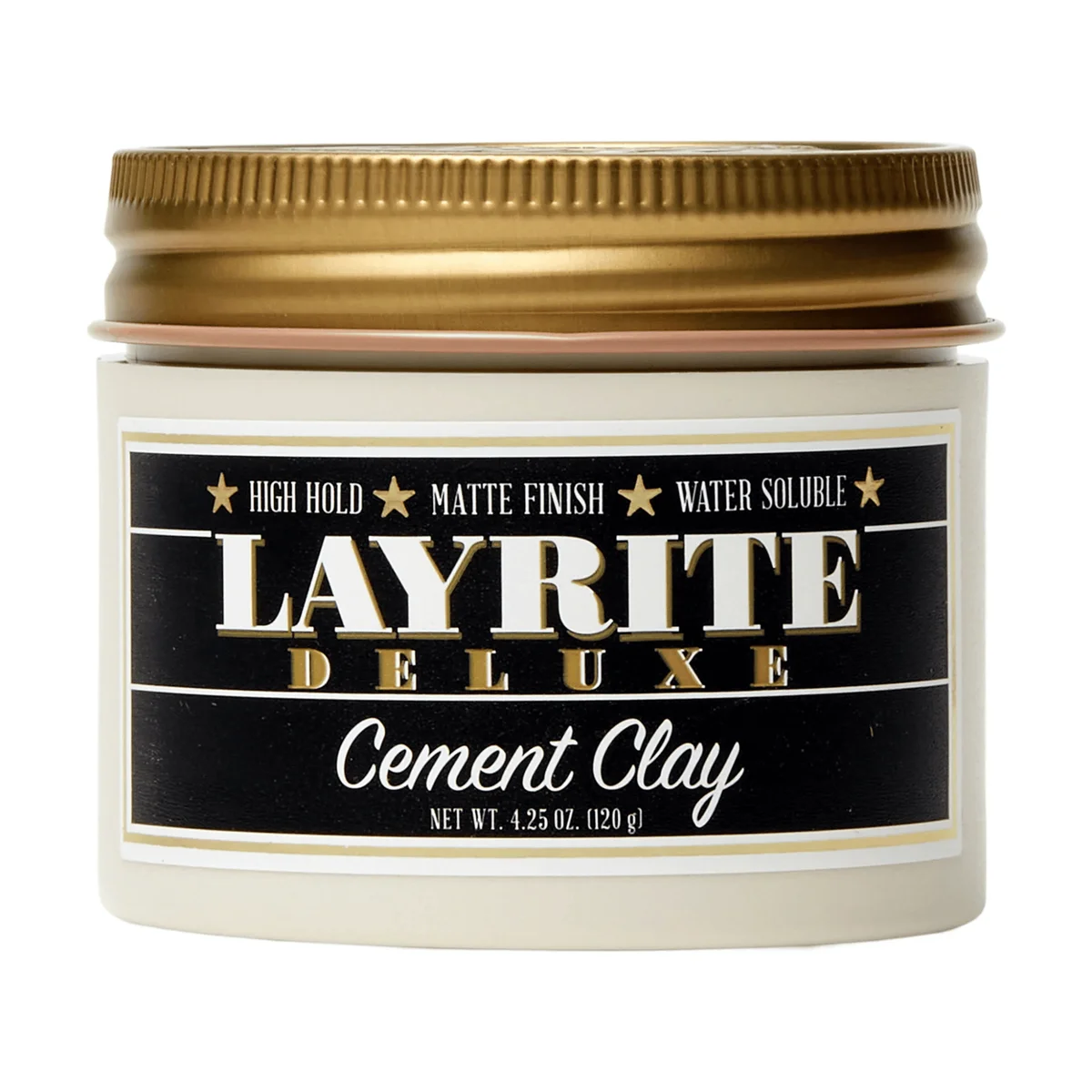
Layrite Cement Clay is the pick for most men: a real 6-8 hours of matte hold on medium-to-thick hair, gone in one shampoo, and roughly half Baxter's per-ounce cost. Fine or thinning hair should skip clay entirely and buy Hanz de Fuko Quicksand instead.
Look, the fiber-versus-clay argument has been running in barbershops and Reddit threads for about fifteen years and almost everyone having it is having the wrong one. It gets framed as a quality debate. Which is better. Which one the good barbers use. Which one makes you look less like a man who styles his hair and more like a man whose hair simply happens that way.
It isn't a quality debate. It's a hair-type debate. Fiber is a wax-and-polymer system built to shove thick hair around and keep it there. Matte clay is a kaolin-and-beeswax system built to add grip and kill shine. Put fiber in fine hair and you've applied a thin coat of candle to your scalp. Put clay in fine hair and you get hold with zero lift, which is a different flavour of the same disappointment. Neither product failed. You bought the wrong philosophy.
So here's the landscape, properly: what fiber actually is, what clay actually is, why hold and volume are two separate things nobody separates for you until you've already binned $22, and which of five products belongs on your shelf. Benchmark is American Crew Fiber at around $16, because it's been the barbershop default since before most looksmaxxing TikTokers could walk. Everything else gets measured against it.
Featured Products
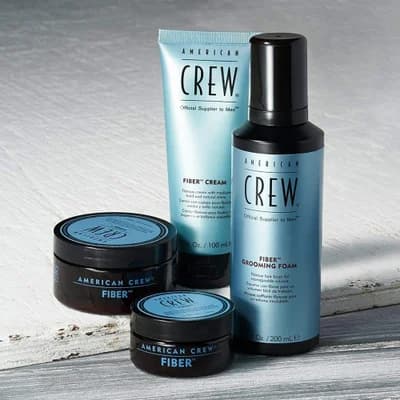
Still the benchmark at around $16, and still the best raw cost-per-use in the category at 2-3 months a tin. High hold, low shine, excellent piece separation on thick and coarse hair. Genuinely wrong for fine or thinning hair, where the wax and lanolin base flattens volume rather than supporting it.
It's the $16 barbershop default everything else in this guide gets measured against.
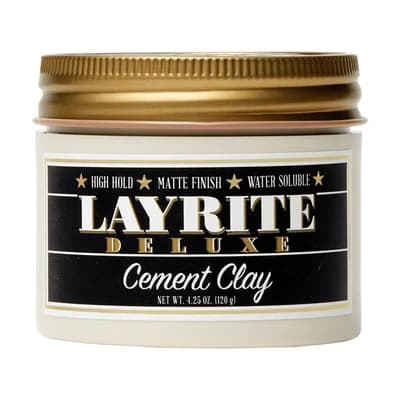
Best all-rounder here for medium-to-thick hair: a real 6-8 hour hold, a true matte finish that reads as texture rather than product, and single-shampoo washout. Roughly half Baxter's per-ounce cost for comparable or better performance. Wants damp hair, and gives fine hair nothing in the way of volume.
Strongest value-to-performance clay in the mid-range and the default recommendation for most readers with normal-to-thick hair.
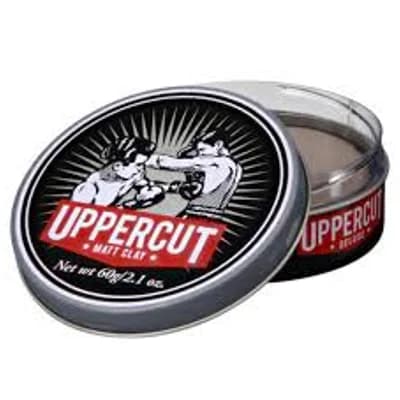
The most beginner-friendly clay of the three: forgiving texture, consistent tin to tin, around 7/10 hold and a clean matte finish for the money. Re-workability falls off after 15-20 minutes, so you commit early, and the medium-strength scent is divisive with no unscented alternative.
Easiest entry point into clay for someone who's only ever used fiber.
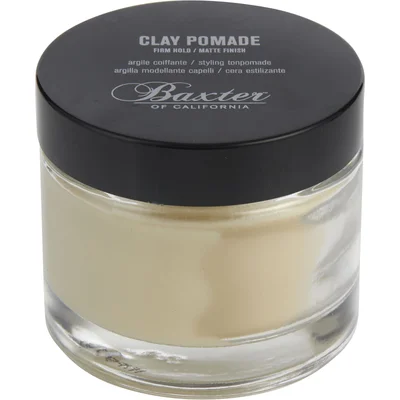
Excellent product, mediocre pricing. Clean matte finish, 6-8 hours with no crunch, and the best mid-afternoon pliability of the three clays. But 2oz for about $22 is poor volume-to-price when Layrite does a very similar job for roughly half the per-ounce cost.
It set the standard for mid-range clay pomades and still sets it for all-day pliability.
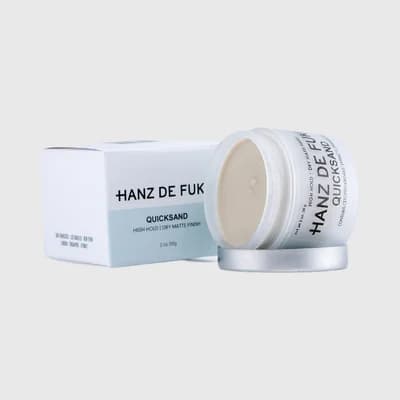
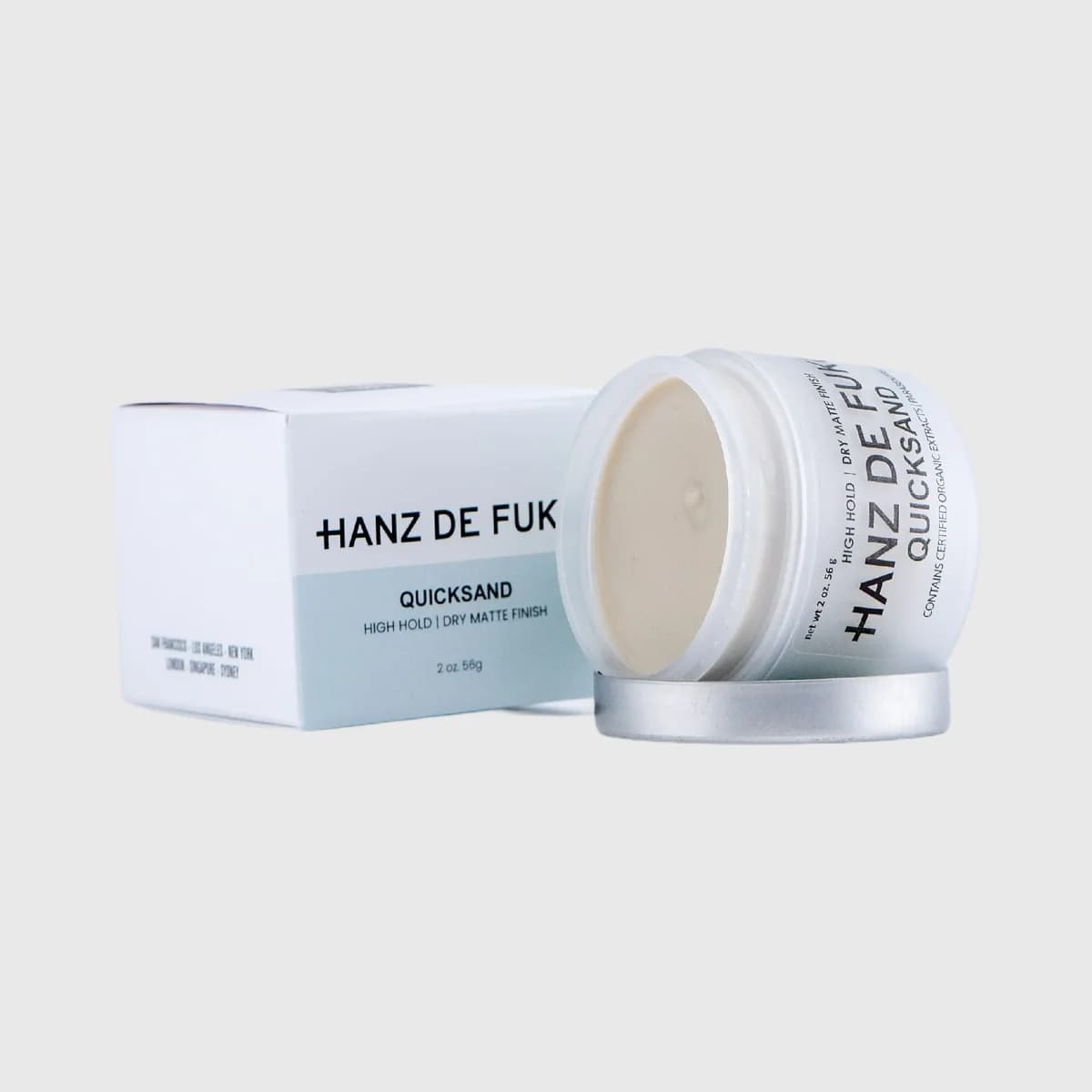
The only product here that actually creates perceived volume, which makes it the obvious pick for fine, limp or thinning hair. Properly matte, reworkable all day, tiny dose needed. Steep dosage learning curve and underpowered on thick or coarse hair, so it's a specialist, not an all-rounder.
It breaks the fiber-vs-clay binary and solves the volume problem neither category bothers with.
The argument you're actually having (and why it's the wrong one)
Every fiber-vs-clay thread collapses into the same two camps. Camp one says fiber is dated, waxy, impossible to wash out, the styling product of a man who still owns a Ben Sherman shirt. Camp two says clay is overpriced mud in a tin and your barber has been using the same $16 pot for twenty years for a reason.
Both camps are describing their own hair and assuming it's everyone's. Right? That's the whole fight.
What actually decides the outcome is three variables: hair density (how much of it there is), hair diameter (how thick each strand is), and what you want the style to do (hold a shape, or fake volume you don't have). Product philosophy maps onto those fairly cleanly. The marketing just won't tell you, because "this product will disappoint roughly 40% of you" is not a deck anyone's signing off.
What fiber is: wax, pliability, and the $16 barbershop default
Fiber is a wax-based system. In American Crew's case the working ingredients are beeswax, lanolin and PVP (polyvinylpyrrolidone, a film-forming polymer doing the actual gripping). You warm it between your palms, it goes stringy, and that stringiness is the entire point: it's physically bonding hair to hair. It pulls separate strands into visible pieces.
That's why fiber reads as *texture* rather than *shape*. It's good at making thick hair look deliberately messy. It's good at a modern crop, a textured quiff, anything where you want pieces instead of a smooth sweep. Finish is matte-adjacent rather than fully matte: a faint low sheen, more "healthy hair" than "wet look".
The cost of the wax system is weight. Wax is heavy. Lanolin is heavy. On thick hair that's a feature, because thick hair is fighting you and you want something that can push back. On fine hair the weight is the whole problem. You apply fiber, you end up with less volume than you started with, and you conclude fiber is bad. Fiber isn't bad. Fiber just isn't for you.
What matte clay is: kaolin, bentonite, and the grip-over-shine trade
Clay products use kaolin clay (occasionally bentonite) as the structural ingredient, usually with beeswax as a binder and either water or oil carrying it. Kaolin does two things: absorbs oil, and creates microscopic grip between strands. That's where the dry, dusty, no-shine finish comes from.
The trade is simple. Clay buys you a genuinely matte look and a gritty texture that reads as natural. What it mostly doesn't buy you is lift. Kaolin adds a bit of body because it's a powder sitting on the hair shaft, but on most formulations the beeswax cancels it straight back out. You get hold. You get matte. You don't reliably get volume.
The good news: water-based clays like Layrite Cement Clay, Uppercut Deluxe Matt Clay and Baxter of California Clay Pomade all come out in a single shampoo. No clarifying, no three-rinse penance, no standing under the shower wondering why your hair still feels like a draught excluder.
Hold vs volume: the distinction nobody explains before you've wasted $22
And I cannot stress this enough: hold and volume are different products doing different jobs.
- Hold means your hair stays where you put it. High hold on a structured side part, a pompadour, a swept-back crop.
- Volume means your hair looks like there's more of it. Lift at the root, separation at the ends, the appearance of density.
Most clays and all fibers are hold products. If you have fine or thinning hair and you buy a high-hold product, you'll get exactly what you paid for: your flat hair, held flat, for eight hours. Technically a success. Visually a crime scene.
The volume category is small and it's mostly dry waxes and powder-forward creams. Which is where Quicksand comes in, and why it's sitting in a guide ostensibly about two other things.
> Mariana's Take: From across a table I cannot tell you whether a man used clay or fiber, and neither can anyone else. What I can tell you instantly is whether his hair looks greasy or whether it looks like hair. That's the only distinction the rest of us are making.
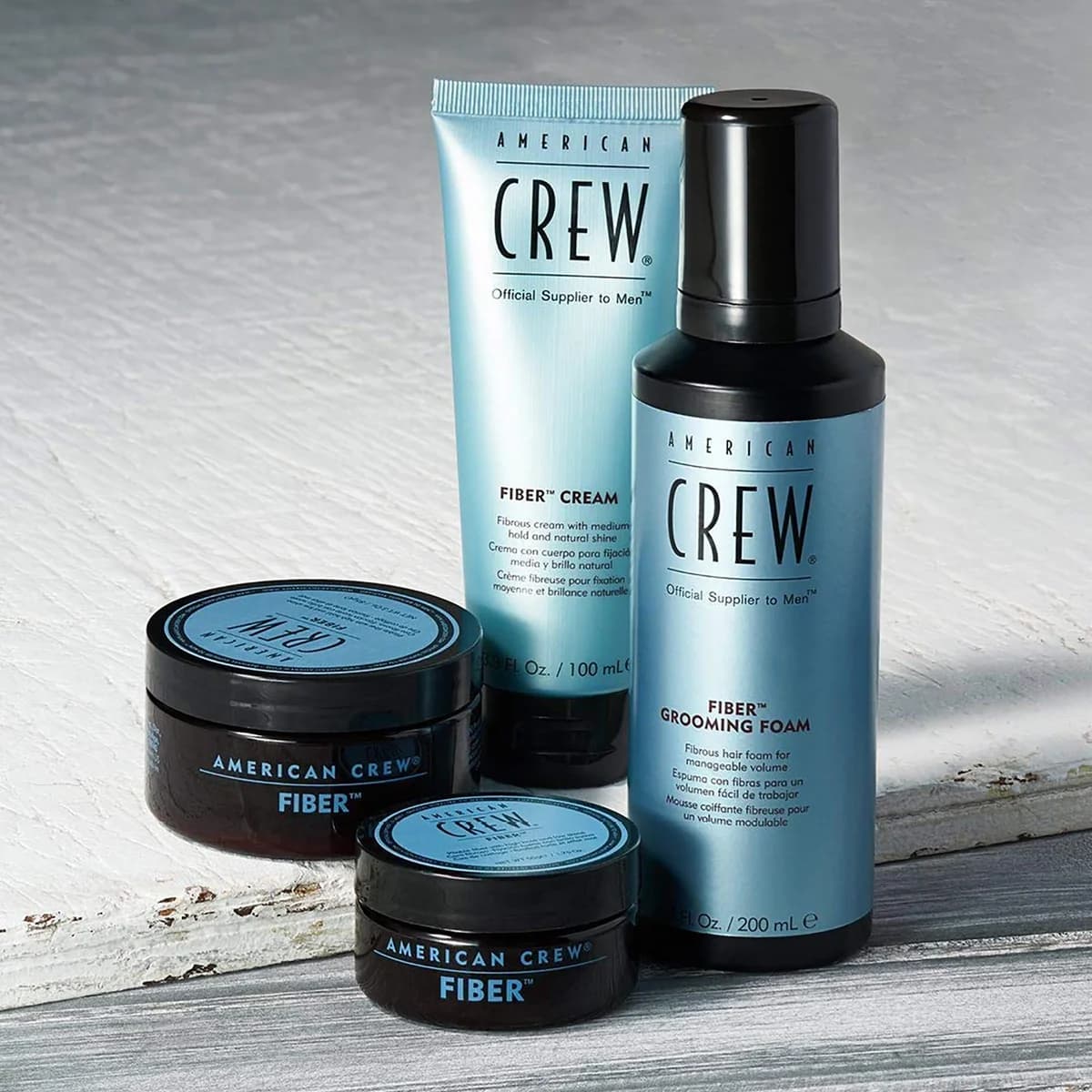
American Crew Fiber: the benchmark, and exactly who it fails
About $16 for 3oz. Twenty-plus years in professional barbershops. It's the Toyota Hilux of styling products: nobody writes poetry about it, everybody's seen one still going after a decade.
What it actually does: high hold, low-to-medium shine, strong piece separation. On thick, wavy or coarse hair it'll hold a textured crop through a full working day with no reapplication. Cost-per-use is genuinely excellent: at a sensible dose, one tin runs 2-3 months of daily use. That's roughly 20 cents a day, which makes most of the boutique competition look faintly silly. I've run it against several of the trendier barbershop-brand fibers and there's no meaningful performance gap, just a packaging gap.
Who it fails: fine hair, thinning hair, anyone chasing lift. The wax-and-lanolin base drags the hair down and you'll end up looking less dense than you did in the mirror beforehand. It's also less reworkable than the water-based stuff: once it's set, attacking it at 4pm gives you clumping rather than a fresh shape.
Verdict on the benchmark: still the best value high-hold product in the category, and still the wrong product for about a third of the men buying it.
The matte clays worth buying
Layrite Cement Clay
Strongest of the three on pure hold. A real 6-8 hours on structured styles without touching it, a true matte finish that reads as texture rather than product, water-based so it rinses clean. Kaolin, beeswax and panthenol doing the work, and it's alcohol-free.
The value case closes it: roughly half the per-ounce cost of Baxter's clay pomade for arguably better hold. The downsides are real, though. It wants damp hair for even distribution, and bone-dry application gets you clumps. And like every clay here, it gives fine hair hold and precisely no volume.
Uppercut Deluxe Matt Clay
Around 7/10 hold, genuinely matte, single-shampoo washout, and the most beginner-friendly clay here because the texture is forgiving and consistent tin to tin. No batch lottery, which sounds like faint praise right up until you've opened a tin that was noticeably softer last time.
Two gripes. Re-workability drops off hard after 15-20 minutes, so you commit to your style early or not at all. And the scent is medium strength, masculine, and divisive. There's no unscented version, so if you're layering a fragrance you actually care about, factor it in.
Baxter of California Clay Pomade
The one that made mid-range styling products respectable in the first place. Clean matte finish with no shimmer, 6-8 hours of hold on medium-to-thick hair with no crunch, and it stays pliable all day rather than setting solid, which is exactly where it beats Uppercut.
The problem is arithmetic. 2oz for about $22 is a mediocre volume-to-price ratio when Layrite does a comparable job for roughly half the per-ounce cost. Good product, pricing problem. Buy it if you want the all-day pliability and don't mind paying the tax.
Hanz de Fuko Quicksand: the dry wax that breaks the binary
This is the product that makes the fiber-vs-clay framing fall apart, because it's technically both and functionally neither. Kaolin clay, beeswax and silica, formulated as a dry wax instead of a wet one. The silica is the trick: it's a volumising powder, and it does the lifting clay alone never manages.
On fine, straight, wavy or thinning hair, Quicksand does something none of the other four here can. It creates actual perceived density. Properly matte, no plasticky sheen, reworkable all day without going crunchy, and a very small amount covers a full head, so the per-use cost lands lower than the tin price suggests.
Two honest caveats. The dosage learning curve is steeper than anything else on this list: too much product and the volume effect vanishes instantly, which is the exact opposite of what you wanted. And it's underpowered on thick or coarse hair, where you just need more wax and more hold. The light scent isn't neutral either, which some people mind.
It's my pick for fine hair, no hesitation. It's also the product I'd most likely get wrong on my first three attempts, so budget for a learning week.
Cost-per-use: why the $16 tin isn't automatically the value pick
That $16 price tag on American Crew Fiber only translates into value if the product works on your hair. A $16 tin you abandon after three weeks costs more than a $24 tin you finish. That's the whole calculation and almost nobody runs it.
Rough per-use maths at a correct (small) dose:
- American Crew Fiber: 3oz, roughly 2-3 months daily. Best raw cost-per-use in the group.
- Layrite Cement Clay: strong per-ounce value, roughly half Baxter's rate. The sensible mid-range default.
- Uppercut Deluxe Matt Clay: mid-pack. Fair, not remarkable.
- Baxter Clay Pomade: worst volume-to-price ratio here at 2oz for about $22.
- Hanz de Fuko Quicksand: higher upfront, but you use so little per application that the real-world cost sits closer to the clays than the sticker implies.
Wash-out, rework, and the 4pm collapse test
The test I actually run: style at 8am, touch nothing, look in a mirror at 4pm.
Layrite and Baxter both pass cleanly on medium-to-thick hair, 6-8 hours with no crunch. Baxter stays more pliable if you want to push it around mid-afternoon. Uppercut holds fine but resists reshaping after the first 20 minutes. American Crew Fiber holds longest on thick hair but is the most stubborn to rework, and the wax base picks up a bit of ambient shine by late afternoon. Quicksand is the most reworkable of the lot, which matters more on fine hair, because fine hair is the first thing to collapse.
Wash-out: Layrite, Uppercut and Baxter are single-shampoo. American Crew Fiber's wax-and-lanolin base is heavier going and wants a proper lather. Not clarifying-shampoo territory, but you'll notice.
Pick by hair type
- Fine: Hanz de Fuko Quicksand. Nothing else here gives you lift. Avoid fiber entirely.
- Thinning: Quicksand again. The matte finish also stops scalp shine reading through, which is a bigger visual win than most men expect.
- Medium: Layrite Cement Clay for hold, Baxter if you want to restyle at lunch. Fiber works if you're after visible piece separation.
- Thick: American Crew Fiber or Layrite. Both have the backbone. Fiber for texture, Layrite for shape.
- Coarse or curly: American Crew Fiber. The wax content is doing necessary work that clay alone won't.
Application: the dosage error that ruins all five of these products
This is the single most common failure and it applies to everything on this list. You are using too much.
Correct dose for a short-to-medium cut is roughly a pea. Maybe a small grape if your hair's thick. Not a fingertip scoop. Not a knuckle. Emulsify it fully between both palms until it goes clear or stringy, work it through the back and sides first, and only then go near the front, where all the visible damage happens. Fingertips last.
Clays want damp hair, not wet, not dry. Fiber wants towel-dry to dry. Quicksand wants fully dry hair and the lightest hand you can manage.
> Mariana's Take: Nine out of ten times a man's hair looks bad it's because he used four times the product he needed, not because he bought the wrong tin. From a conversational distance, over-application reads as unwashed. That's the whole problem.
Jamie's verdict: what's in my bathroom and why there are three tins
Three tins, and yes, before you say anything, I'm aware. Layrite Cement Clay for normal days, because it does the most for the money and I've got medium-to-thick hair that behaves. American Crew Fiber for days when I want visible texture rather than a shape, and because at $16 it's the only styling product I've never resented buying. Quicksand in the cupboard for when I've gone too long between cuts and need the illusion of volume more than I need hold.
That's not a flex, it's a confession. Most of you need one. Work out if you're buying hold or volume, buy accordingly, and use a quarter of what you think you need. That won't add a point to anything, but it will stop your hair looking like it's spent nine hours under a hat.
Tips
- 1.Decide if you're buying hold or volume before you buy anything. Hold keeps hair where you put it; volume makes it look like there's more of it. Clays and fibers do the first. Only a dry wax like Quicksand reliably does the second.
- 2.Halve your dose, then halve it again. A pea for short-to-medium hair, a small grape for thick. Emulsify fully between both palms, go in at the back and sides first, and touch the front last with whatever's left on your fingertips.
- 3.Match the product to hair moisture: clays want damp hair for even distribution, fiber wants towel-dry to dry, Quicksand wants fully dry. Applying clay to bone-dry hair is the main cause of the clumping everyone blames on the formula.
The Bottom Line
If you've got medium-to-thick hair and want one tin that does nearly everything, buy Layrite Cement Clay: 6-8 hours of matte hold, clean washout, best per-ounce value in the mid-range. If your hair is fine or thinning, ignore the entire fiber-vs-clay argument and buy Hanz de Fuko Quicksand instead. American Crew Fiber at $16 is still the smartest budget buy in the category, assuming you've got the hair for it.
Frequently Asked Questions
Is American Crew Fiber or matte clay better for fine hair?
How much American Crew Fiber should I use?
Does American Crew Fiber wash out easily?
Is Baxter of California Clay Pomade worth the price?
Which texture product has the strongest hold?
What is the difference between hold and volume in hair products?
Which is cheapest per use, American Crew Fiber or clay?
Related Guides
SIMILAR TO
Similar to Hanz de Fuko Quicksand: 5 Cheaper Matte Texturisers That Do the Same Job ($16–$22)

Imperial Barber Forming Cream is the best cheaper stand-in at roughly $17-19 for 6oz, because it's the only one here that won't flatten fine hair. You get a natural low-shine finish that reads close to Quicksand's matte look at a quarter of the cost per ounce, minus the volume lift.
VS
Baxter of California Clay Pomade vs American Crew Fiber: Which Matte Hold Is Actually Worth Your Money?
For most men, American Crew Fiber is the better buy - same hold quality as Baxter of California Clay Pomade at roughly half the cost-per-use, with a two-decade track record that no amount of clay pomade marketing can argue with. Baxter wins on finish purity and reworkability if you have medium-to-thick hair and genuinely care about the difference between matte and matte-adjacent - but that's a premium most people shouldn't pay.
BEST OF
Best Hair Styling Products for Men 2026: Pomade vs Clay vs Fiber — Ranked by Hair Type
For most men, the wrong format is doing more damage than the wrong brand - and Hanz de Fuko Quicksand is the one product that consistently fixes this, particularly if your hair is fine or limp and every other clay or pomade has left you looking like you've been caught in a light drizzle. It scores 82/100 here, tops the list, and the dry wax format is genuinely the most under-used category in men's styling.
BEST OF
Best Hair Clays for Men 2026: 5 Matte Holds Ranked
Layrite Cement Clay is the best hair clay for most men in 2026: properly matte, water-based, holds a structured style for 6-8 hours and rinses out in one shampoo. Around $20-22. If your hair's fine, skip it and buy Hanz de Fuko Quicksand instead.