
HOW TO
Retinol for Beginners: How to Use It Without Burning Your Face Off
The only retinol guide that admits the purge is real and tells you what to pair it with.
Last updated: August 25, 2026
Quick Answer
The Ordinary Retinol 0.5% in Squalane is the right starting point for most men getting into retinol - same active concentration as products costing six times more, the squalane base is forgiving enough to take the edge off early irritation, and at under $9 for a bottle that lasts four months, you've run out of financial excuses. Pair it with the CeraVe Hydrating Facial Cleanser, La Roche-Posay Toleriane moisturiser, and EltaMD UV Clear SPF 46 and you have a complete protocol that a dermatologist would recognise as legitimate.
Right, let me tell you about the three weeks in late 2024 when my face looked like I'd lost an argument with a radiator. That was me starting retinol at the wrong concentration, skipping the buffer moisturiser because 'how bad can it be,' and - and I cannot stress this enough - genuinely believing that more irritation meant it was working harder. Reader, it was not working harder. My skin barrier was just broken.
Retinol is probably the most evidence-backed ingredient in skincare that isn't a prescription drug. That's not a bold claim - it's just what the clinical literature says. Decades of peer-reviewed data on collagen stimulation, accelerated cell turnover, texture improvement, fine line reduction. The TikTok kids who talk about it like it's some mystical discovery didn't discover anything - they just found out about it forty years after dermatologists did. The discourse is annoying. The ingredient is not.
The problem is that most retinol guides are written by brands selling retinol, which means they'll tell you the good bits and gloss over the part where your skin purges for three weeks and your colleagues ask if you're sleeping. This guide is written by someone who made every beginner mistake available - wrong concentration, wrong routine, no SPF, complete barrier destruction - and came out the other side with genuinely better skin and a list of things I'd do differently. Here's the whole protocol. It's not complicated. It just requires not skipping steps.
Featured Products
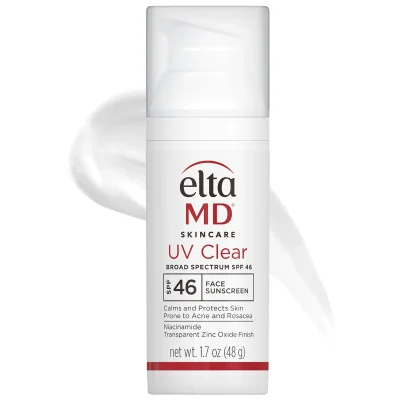
The better SPF pick for this protocol if budget allows - the 5% niacinamide helps manage the sebum and redness that can flare during retinol adaptation, the matte finish is actually wearable (not just 'invisible with good lighting'), and the zinc oxide formula has no white cast issue at this percentage. The tube runs out fast if you're applying properly, which is the cost to factor in.
The primary SPF recommendation for men starting retinol - chosen for the niacinamide formulation that complements the adaptation period, the matte finish, and its dermatologist-level credentials.
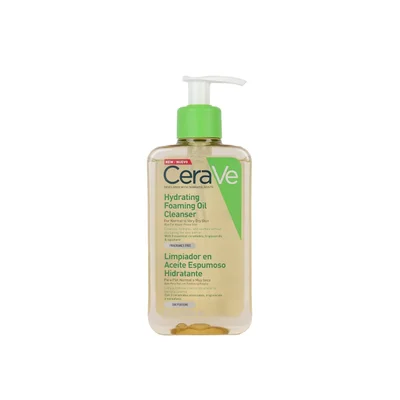
The right cleanser to pair with retinol - non-stripping, fragrance-free, and genuinely barrier-safe in a way that matters when you're applying an active that's already nudging your skin's resilience. It doesn't foam, which is mildly unsatisfying, and it does absolutely nothing active. Both of those things are features, not bugs.
The foundational cleanser for this beginner protocol - chosen specifically because it won't undermine the barrier you're trying to build through retinol adaptation.
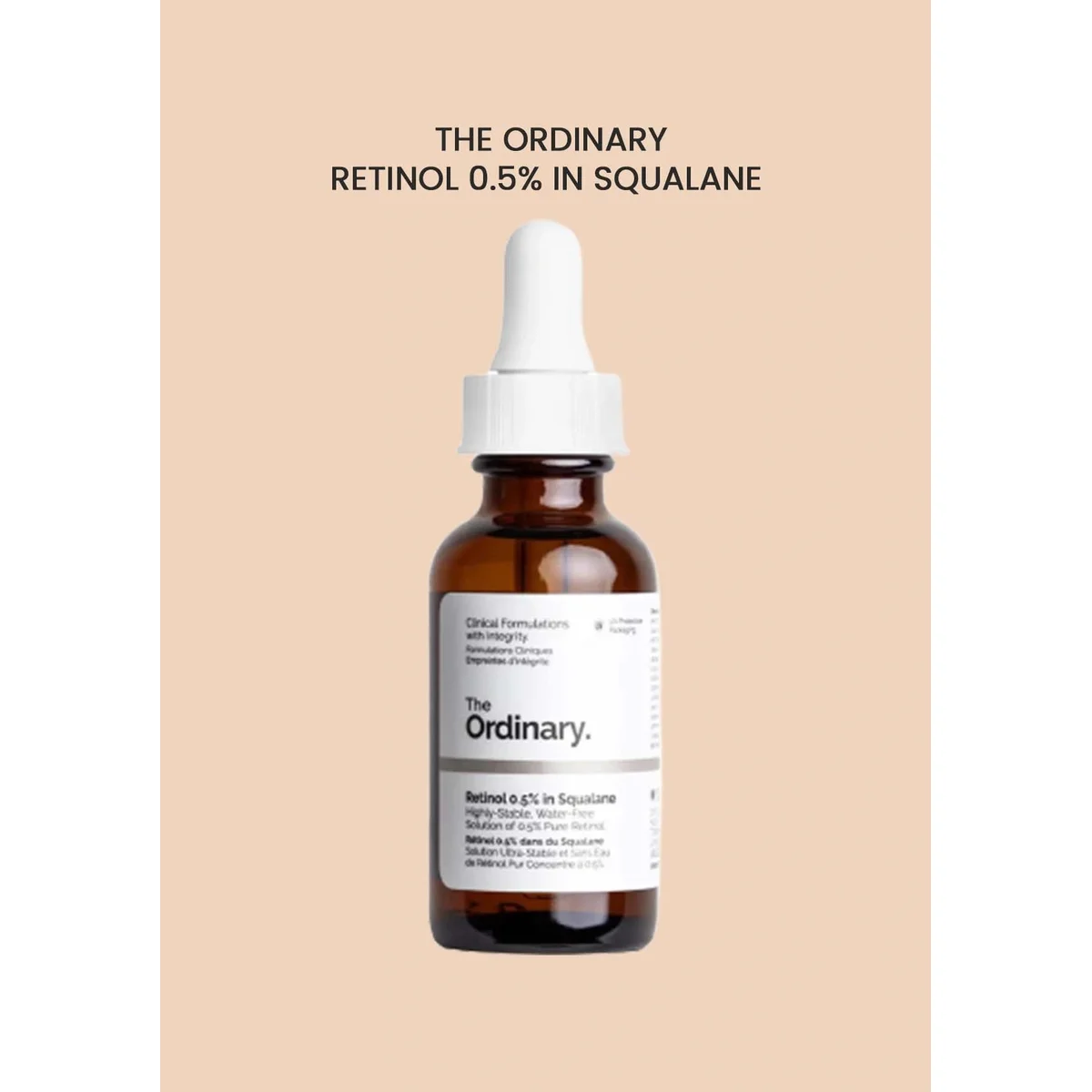
The core product of this protocol - 0.5% retinol in a squalane base that's gentler than alcohol-suspension competitors, at a price that removes every financial excuse for not doing this properly. The lack of encapsulation means you need to store it correctly, and newcomers to retinoids should do 4 weeks at a lower concentration first. But for men who've done their introduction, this is the product that makes a legitimate retinol routine accessible without paying SkinCeuticals prices for identical active content.
The primary retinol recommendation for this guide - affordable, effective, formulated sensibly, and the most accessible entry point to a clinically validated skincare active.
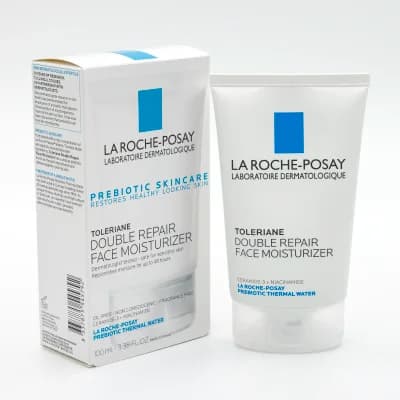
The moisturiser you're sandwiching around the retinol, and it earns the role - fast-absorbing, ceramide and niacinamide backed, fragrance-free, and tolerated well by reactive skin. The undisclosed niacinamide concentration is the one thing stopping a higher recommendation, but the formulation track record on post-treatment and sensitive skin is strong enough to trust.
The sandwich method requires a moisturiser with genuine barrier credentials and fast absorption - this delivers both, which is why it's specified for this protocol.
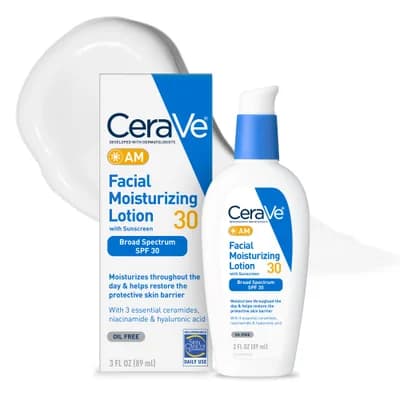
The budget SPF that covers the brief for most indoor-leaning, fair-to-medium-skinned beginners - SPF 30, ceramide support, niacinamide, and a per-use cost low enough that you'll actually apply it in the right amount. The white cast is real on darker skin tones, and if you're outdoors regularly you want SPF 50+. But as an accessible morning step for an urban retinol routine, it earns its place.
The budget-accessible SPF alternative for this protocol - included because the non-negotiable SPF step needs to be financially viable for everyone starting this routine.
What Retinol Actually Does (And Why the TikTok Version Is Both Right and Annoying)
Retinol is a form of Vitamin A. When you apply it to your skin, enzymes in the dermis convert it to retinoic acid, which is the biologically active form. Retinoic acid binds to receptors in skin cells and does two specific things that matter: it accelerates cell turnover (the process by which old skin cells shed and new ones replace them), and it stimulates fibroblasts to produce more collagen.
Cell turnover naturally slows as you age. In your twenties, skin cells cycle roughly every 28 days. By your forties, that's closer to 45-60 days. Slower turnover means dead cells accumulate on the surface, pores clog more easily, texture becomes uneven, and pigmentation hangs around longer than it should. Retinol essentially forces the system to run faster. New cells up, old cells out, quicker than your skin would manage on its own.
The collagen side is where the anti-ageing reputation comes from. Retinoic acid directly stimulates collagen type I and III synthesis and inhibits the enzymes that break collagen down. This is why long-term retinol users show measurable increases in dermal thickness - not a marginal improvement, actual structural change in the skin over months and years.
The TikTok version of this is: 'retinol is literally the only thing that works.' Which is - annoyingly - roughly correct. It's the most validated topical ingredient in non-prescription skincare. The irritating part is the delivery: fifteen-second videos where someone holds up a bottle and says 'I just woke up like this' while their ring light does most of the skincare. The science is real. The influencer presenting it is selling something. Keep those two things separate and you'll be fine.
> Mariana's Take: When a man in his late thirties or forties starts using retinol consistently - and I mean consistently, three-plus months - the change in skin texture is visible in normal light, not just filtered photos. Not dramatic. Not surgery. Just: cleaner, less tired-looking. It's the softmaxx that actually moves the needle.
---
The Beginner's Mistake: Why Starting Too Strong Is the Only Real Error
Retinol comes in concentrations ranging from around 0.025% up to 1% over the counter, with prescription-strength tretinoin starting at 0.025% and going to 0.1% (tretinoin is retinoic acid directly - no conversion step, significantly stronger, requires a doctor). The number is not a quality rating. It is a dosage.
The beginner mistake - my mistake, specifically - is assuming that a higher percentage gets you to results faster. This is not entirely wrong. A higher concentration does produce more cellular turnover. But it also produces more irritation, more barrier disruption, and a worse purge. And the research doesn't support starting high. Studies on retinol efficacy show that 0.25-0.5% applied consistently over 12 weeks produces comparable results to higher concentrations, with significantly less dropout due to irritation. Because people who get a chemical burn in week two stop using it. And a product you've abandoned at week two has a 0% efficacy rate, regardless of what concentration is printed on the box.
If you have never used a retinoid before, the protocol is:
- 0.2% or lower for the first 4 weeks
- 0.5% from week 5 onwards once your skin has adapted
- 1% only if you're 6+ months in and have specific, identified reasons for it
If you've used retinoids before - say, an adapalene acne product or a retinyl palmitate moisturiser - you might be able to start at 0.5%. But if this is your first rodeo, start mild. The results at 3 months are the same either way. The experience getting there is not.
---
The Retinol Sandwich Method: How to Get Results Without Destroying Your Barrier
The sandwich method is genuinely clever and not cope. The concept: apply moisturiser before retinol (not just after) to dilute the delivery and reduce irritation, while still allowing the active to penetrate and work. You're not blocking the retinol - you're pacing it.
The sequence:
1. Cleanse
2. Apply a thin layer of moisturiser - let it absorb for 60-90 seconds
3. Apply retinol
4. Apply another layer of moisturiser on top
The reasoning is sound: retinol penetration isn't meaningfully impeded by a hydrating moisturiser, but the buffered environment reduces transepidermal water loss during the process, which is the primary cause of the irritation, dryness, and peeling most beginners experience. Studies comparing buffered vs. unbuffered retinol application show similar efficacy outcomes at 12 weeks with notably lower rates of dermatitis and barrier disruption in the buffered group.
For the first month - genuinely, the first month - use the sandwich method every single application. After that, if your skin has adapted well, you can drop the pre-moisturiser layer and just apply moisturiser after. But in the beginning, the sandwich is not optional. It's the protocol.
La Roche-Posay Toleriane Double Repair Face Moisturiser earns its place here specifically as the bread in this sandwich. It absorbs in under 60 seconds (important - you don't want to be waiting four minutes for a greasy film to dry at midnight), contains ceramides and niacinamide for genuine barrier support, and it's fragrance-free with minimised preservatives, which matters when you're also applying an active that's already nudging your barrier. The undisclosed niacinamide concentration is mildly annoying - LRP don't publish the percentage, so you're trusting the formulation rather than verifying it yourself. But the track record on reactive and post-treatment skin is strong enough that I'd rather have this than a product that tells me it's 10% niacinamide and irritates me anyway.
> Mariana's Take: The sandwich method also matters for what you smell like, for the record. Dry, compromised skin after a bad retinol reaction absolutely affects how fragrance performs. Healthy barrier, better skin, fragrance actually behaves. Not nothing.
---
The Purge: What It Is, Why It Happens, and How Long You Have to White-Knuckle It
The purge is real, it is temporary, and it is not the product damaging you. Here's what's actually happening:
When you start retinol, accelerated cell turnover means everything that was sitting in your pores - oxidised sebum, dead skin cells, early-stage blocked pores that haven't surfaced yet - comes up faster than it would have naturally. Breakouts that would have appeared over the next six weeks appear in the next two weeks instead. It's not new congestion. It's existing congestion on a faster timeline.
This typically peaks at weeks 2-4 and resolves by weeks 6-8. After which your skin is cleaner, clearer, and turns over faster than before - which is the entire point.
How to tell the difference between a purge and a genuine reaction:
- Purge: primarily in areas where you normally break out, small-to-medium spots, appears within 2-4 weeks of starting, gradually resolves
- Reaction: redness, burning, peeling in patches, appears across the whole face including cheeks and forehead, gets worse not better
If it's a purge, white-knuckle it. Drop application frequency to once per week if needed, use the sandwich method every time, and wait it out. If it's a reaction - barrier disruption, actual dermatitis - stop, let your skin recover for two weeks, and restart at a lower concentration with the sandwich method firmly in place.
I won't pretend the purge is fun. Weeks two and three were, for me, the time when I questioned every decision I'd ever made. By week eight, I stopped questioning.
---
The Non-Negotiable: Why SPF Is the Other Half of This Protocol
Retinol increases photosensitivity. This is not a 'may cause' situation - it's a direct consequence of the mechanism. Faster cell turnover means newer, less UV-hardened cells on the surface. Retinoic acid also temporarily suppresses some of the skin's natural UV-protective responses. Without SPF, you're using retinol at night to build collagen and then spending daylight hours passively destroying it. The net result is approximately nothing, except your skin is also more sensitive and you've wasted everyone's time.
SPF is the other half of this protocol. Not optional. Not 'on sunny days.' Every morning.
EltaMD UV Clear SPF 46 is the one I actually use, and it's the one I'd recommend to someone starting a retinol routine specifically because the 5% niacinamide helps manage the sebum and redness that can flare up during the retinol adaptation period. It's a mineral SPF with 9% zinc oxide, which sounds like it would leave you looking like a cricket player, but the formula is matte and virtually invisible on fair-to-medium skin tones - genuinely wearable, not performative. The 48ml tube runs out in about 5-6 weeks if you're applying a proper quarter-teaspoon amount to your face (not the light smear that feels like you've done something but hasn't). That's the only real cost complaint.
If you're on a tighter budget, CeraVe AM Facial Moisturizing Lotion SPF 30 combines SPF protection, ceramide barrier support, and niacinamide in one step at a fraction of the price. The faint white cast is real and more noticeable on medium-to-dark skin tones. SPF 30 is also the minimum viable threshold - if you're outdoors frequently or live somewhere with sustained UV exposure, you want SPF 50+. But as an everyday urban morning product for someone starting a retinol routine on a budget, it covers the brief.
Either way: no SPF, no retinol. That's the deal.
---
The Starter Protocol: Week-by-Week for the First Three Months
This is the protocol I'd give myself if I could go back. It is not the one I used. The one I used ended in three weeks of skin that looked like it had opinions about me.
Weeks 1-4: Introduction
- Frequency: once per week, at night
- Sandwich method: mandatory (moisturiser, retinol, moisturiser)
- Concentration: 0.2% if possible; if starting at 0.5%, apply the pre-moisturiser layer generously
- SPF: every morning without exception
Weeks 5-8: Building Tolerance
- Frequency: twice per week, at night (Tuesday and Friday, say)
- Sandwich method: still mandatory for most skin types
- If you had a purge, it should be resolving by week 6-7
- Watch for dry patches around the mouth and under eyes - reduce frequency if needed
Weeks 9-12: The Actual Routine
- Frequency: three times per week, at night
- Sandwich method: optional if skin is adapting well; keep the post-moisturiser layer regardless
- By week 12 you should see measurable texture improvement and possibly early reduction in fine lines or pigmentation
- This is when the data starts showing up on your face rather than just in your head
The research on retinol outcomes generally uses 12-week endpoints because that's when statistically significant changes in collagen density and skin texture become measurable in clinical imaging. You're not going to see dramatic transformation in two weeks. You're going to see it at three months if you stuck to the protocol. That's the actual timeline. Anyone selling you a faster one is selling you something else.
---
The Ordinary Retinol 0.5% in Squalane: The Product That Makes This Affordable
Best for: Men who have done 4+ weeks at a lower concentration (or who have prior retinoid experience) and want a mid-strength retinol that delivers measurable results without a prescription or a triple-digit price tag.
What it is: A 0.5% retinol suspension in squalane oil. Squalane is a lightweight, non-comedogenic oil that occurs naturally in skin sebum - it hydrates and protects the barrier without blocking pores or feeling greasy. Using it as the carrier for the retinol rather than an alcohol base means the delivery is gentler, slower, and more skin-friendly than many competitors.
Why this product: The same active concentration - 0.5% retinol - appears in products costing $45-$105+. The Ordinary version is under $9 for 30ml, which lasts 4-5 months at three applications per week. SkinCeuticals sells their 0.5% retinol for roughly six times the price. The formulation is simpler, which is a genuine compliment - fewer ingredients means fewer things to react to. The squalane base is a real advantage over alcohol-based retinol serums at any price point.
The honest caveats: There's no encapsulated delivery system, which means the formula is more vulnerable to oxidation. Store it away from light and heat - the dark glass bottle helps but isn't fully protective. Keep the lid on properly. The purge at this concentration is real, which is why the 4-week low-concentration introduction matters. And to be clear: if this is genuinely your first retinoid ever, start at 0.2% for the first month. The 0.5% is not a beginner product. It's an introductory retinol product for people who've done their intro.
For the price, the formulation logic, and the results timeline, this is the product that makes the whole protocol financially accessible without cutting corners on the active.
---
Building the Full Routine: Cleanser, Moisturiser, Retinol, SPF - In That Order
The full protocol is four products. That's it.
Morning:
1. Cleanse (or rinse with water if your skin isn't oily overnight)
2. Moisturiser (if needed - skip if using a moisturising SPF)
3. SPF
Night (retinol days, 1-3x per week to start):
1. Cleanse
2. Moisturiser - wait 60-90 seconds
3. Retinol (pea-sized amount - genuinely pea-sized, not a $0.07-coin-sized)
4. Moisturiser on top
Night (non-retinol days):
1. Cleanse
2. Moisturiser
That's the complete routine. Four products, two steps in the morning, three or four at night depending on the day. No essence, no toner, no facial oil, no twelve-step K-beauty protocol unless you specifically want those things for other reasons. The brief here is: introduce retinol without wrecking your barrier. This routine delivers that.
CeraVe Hydrating Facial Cleanser is the cleanser in this routine because it does exactly what a cleanser is supposed to do and nothing else: removes surface oil, debris, and SPF without stripping the barrier. Non-foaming, fragrance-free, dermatologist-tested. The lack of lather is psychologically unsatisfying if you've been trained to equate foam with efficacy - it isn't. Foam typically means surfactants aggressive enough to disrupt the acid mantle, which is specifically what you don't want when you're also applying a retinol. The CeraVe costs under $17 for a 16oz pump bottle. There is genuinely no upgrade here. Just use it.
---
When to Level Up (And What Levelling Up Actually Means)
After 3-4 months at 0.5%, three times per week, with no significant ongoing irritation, you have options:
Option 1: Stay at 0.5% - This is a perfectly legitimate outcome. For many men, 0.5% applied consistently is sufficient to maintain the collagen stimulation and cell turnover benefits indefinitely. Not everything needs to be escalated. 'Good results' is a fine place to stop.
Option 2: Move to 1% - The jump from 0.5% to 1% does increase efficacy but it also increases the probability of irritation. Treat it like restarting the introduction protocol: once weekly for 2-3 weeks, then twice, then three times. Don't go straight to nightly application at 1% unless you have the skin of someone who's been on tretinoin for two years and is bored of it.
Option 3: Prescription tretinoin - Tretinoin is retinoic acid - no conversion step, more direct, more potent at equivalent concentrations. 0.025% tretinoin is roughly comparable to 0.5% retinol in terms of skin response. The results are faster and more pronounced. So is the potential for irritation. In the UK this requires a GP or dermatologist prescription (or certain online clinics). In the US, access varies by state. This is not a step to skip to - it's a step to build towards, with 6+ months of OTC retinol experience behind you.
Levelling up is not the goal. Consistent use of the current protocol is the goal. The men getting the best results from retinol are not the ones who moved to tretinoin fastest - they're the ones who used 0.5% without skipping weeks for an entire year.
---
What Retinol Won't Do: Managing Expectations Without Killing Enthusiasm
Retinol will improve skin texture, accelerate cell turnover, reduce the appearance of fine lines over time, help with mild-to-moderate hyperpigmentation, and maintain skin density as you age. These outcomes are backed by clinical evidence across multiple decades of research.
Retinol will not:
- Clear cystic acne (adapalene or prescription treatment is the right tool for this)
- Reverse deep, established wrinkles in 8 weeks
- Change your bone structure (I mention this because the looksmaxxing-to-skincare pipeline is real and some of you are here via some fairly deranged forum content)
- Do anything useful without SPF in the morning
- Work if you start at 1%, burn your face, and abandon it by week three
The honest metric at 12 weeks: your skin should look cleaner, the texture should feel smoother when you run your hand across it, and you should be getting marginally fewer spots if that was an issue. Not transformation. Not PSL point gains - and I say that as someone who absolutely measured his under-eye area at week eight, because nobody is immune to the discourse. Just genuinely better skin, visibly and measurably, if you stuck to the protocol.
That's the brief. That's what retinol delivers. It's less exciting than the TikTok version and more useful than everything else in the skincare aisle.
Tips
- 1.Apply retinol to fully dry skin - wait at least 60 seconds after washing your face, because damp skin absorbs actives faster and more aggressively, which is exactly the irritation mechanism you're trying to avoid in the first month.
- 2.Use a pea-sized amount only - genuinely pea-sized, not a $0.07 coin, not a contact lens, not the amount that looks like it's probably enough. More retinol per application doesn't mean better results; it means more irritation for the same outcome.
- 3.If your skin is peeling or reactive during the first month, reduce frequency rather than stopping entirely - dropping from twice a week to once a week maintains progress while letting your barrier recover, and quitting then restarting resets the adaptation clock.
The Bottom Line
Three months of consistent use, starting at the right concentration, with a barrier-supporting cleanser and moisturiser, and SPF every morning - that's the entire protocol. The Ordinary Retinol 0.5% in Squalane is where you end up after four weeks at something gentler, and it's the product that makes this routine cost less than a round of drinks for six months of genuinely validated skincare. The TikTok mysticism around retinol is irritating precisely because the underlying ingredient doesn't need it - it has forty years of clinical evidence and no need for a ring light.
Frequently Asked Questions
What does retinol actually do for men's skin?
What retinol concentration should a beginner start with?
How do I build a beginner retinol skincare routine without irritating my skin?
Is retinol 'purging' real, or is it just your skin reacting badly?
Do men need SPF when using retinol, and which one should they use?
How long does retinol take to show results, and what should men realistically expect?
Related Guides
HOW TO
How to Build a Men's Skincare Routine: The Three Steps That Actually Add a Point
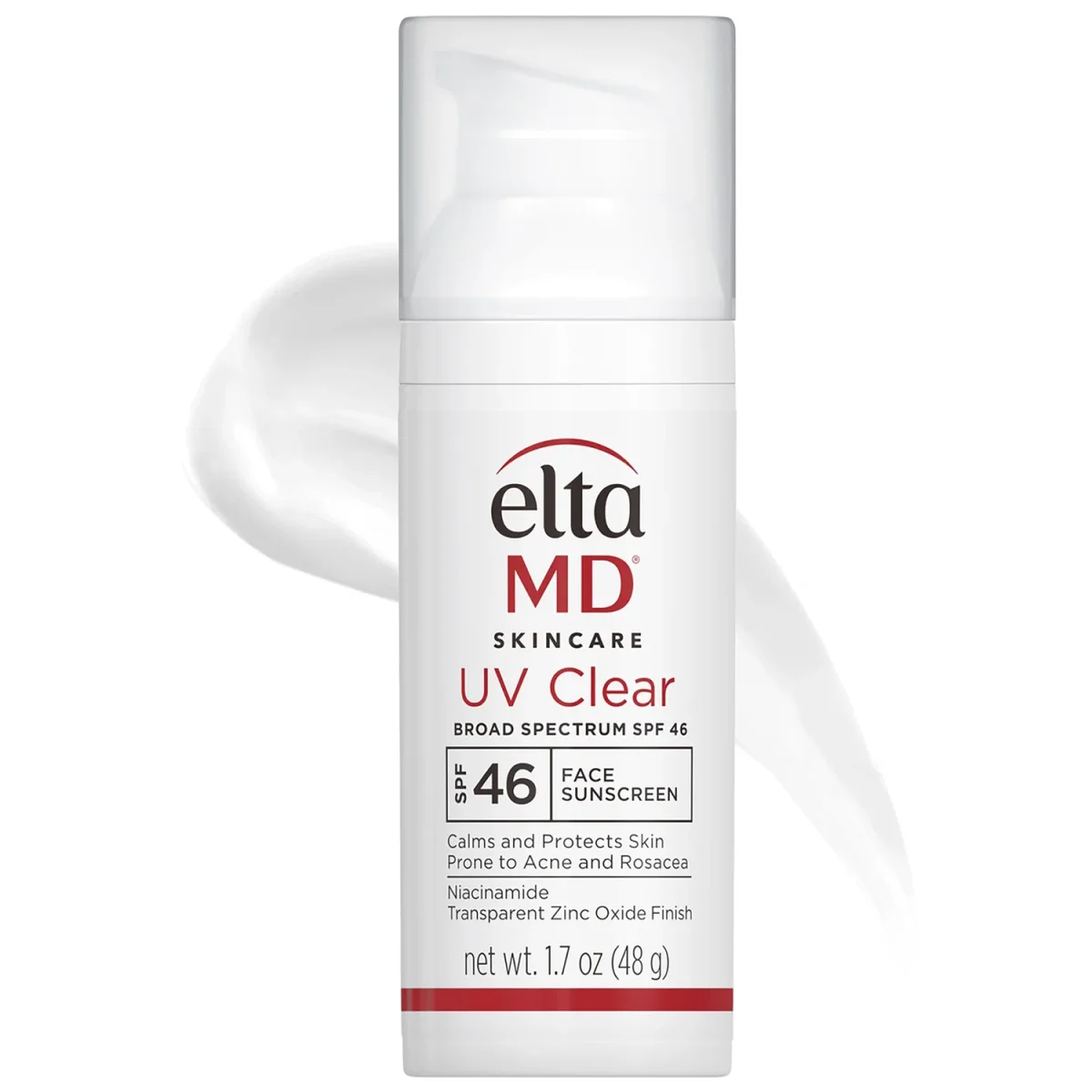
If you're starting from zero, build around CeraVe Hydrating Facial Cleanser, The Ordinary Niacinamide 10% + Zinc 1%, and EltaMD UV Clear SPF 46 - cleanser, one active, SPF. That's it. Three steps, under fifteen minutes a day combined, and your skin will look measurably better in six weeks. Everything else is optional.
DUPE GUIDE
CeraVe vs La Roche-Posay 2026: The Drugstore Wars, Decided
If you can only buy one brand, go CeraVe for the cleanser and PM moisturiser, and La Roche-Posay's Anthelios UVMune 400 for SPF - or EltaMD UV Clear if you're in the US and can't import. Splitting the two brands by category beats going all-in on either, and your skin won't care about your brand loyalty.
DUPE GUIDE
The Ordinary Retinol 0.5% in Squalane: What It Actually Does, What to Pair It With, and What Not to Waste Your Money On
The Ordinary Retinol 0.5% in Squalane is already the budget answer to a $230 SkinCeuticals bottle - same active percentage, 6% of the price, and it works. The catch is that retinol without the right support routine is how you end up with a raw, peeling face and a grudge against actives. Pair it with the CeraVe Hydrating Facial Cleanser, La Roche-Posay Toleriane Double Repair Moisturiser, and EltaMD UV Clear SPF 46, and you've got a complete retinol routine for under $65 total.